Four eligibility factors (nationality, age, academic, marks), India vs USA matrix, AIQ and paid NRI doors, curriculum gap, AIU and GPA, checklist, videos, and FAQ.
 Schedule Your Free Exam Readiness Analysis Session!

Hi, I’m TestprepKart.
Your Partner In Exam Preparation
Prerequisites
If your child studies in the US and you want MBBS admission in India, finish this list first. These are the prerequisites. Until these are answered, do not assume the child is ready to register for NEET or for counselling.
The rest of this page explains each item in detail. Confirm the live NTA bulletin, AIU process, and MCC or state counselling notice for your year.
What this page covers
Four eligibility factors (nationality, age, academic, marks), India vs USA matrix, AIQ and paid NRI doors, curriculum gap, AIU and GPA, checklist, videos, and FAQ.
Shorter nationality and form tables sit on NEET eligibility for NRI students. This page is the deeper prerequisites brief.
Campus fee rows and AFMC cadet rules stay on their own guides. Use those after eligibility and seat-door planning are clear.
Eligibility comparison
NTA’s shared baseline is the same for Indian Nationals, NRIs, OCIs, and Foreign Nationals who are allowed to appear. The difference for a USA family is usually not a softer marks rule. It is extra proof, board equivalence, and later counselling doors. Read this matrix as the heart of the page.
| Requirement | Typical Indian CBSE / state-board student | Typical USA NRI / OCI / US-curriculum student | What the USA family must add |
|---|---|---|---|
| Who may sit NEET | Indian national with matching ID and school papers | Indian national abroad (NRI), OCI cardholder, or foreign national as the bulletin allows | Enter nationality that matches the passport. Do not tick NRI only because the family lives in the US |
| Minimum age | 17 on or before 31 December of the admission year | Same age rule | Match date of birth across US passport, birth certificate, and school records |
| Subjects | Physics, Chemistry, Biology or Biotechnology, English in Class 11-12 pattern | Same subject set required | Force PCB together on a US timetable that often splits sciences; keep lab evidence |
| Qualifying exam recognition | CBSE, CISCE, or recognised Indian state board marksheet is usually enough | US High School Diploma, AP, IB, or other foreign board must be accepted as Class 12 equivalent when asked | Plan AIU or concerned-university equivalence; prove school accreditation for school-awarded US diplomas |
| Marks language | Percentage on board marksheet for PCB aggregate planning (about 50% general) | GPA or letter grades at school; counselling still thinks in percentage terms | Do not DIY a GPA×formula chart; use formal equivalence language |
| After NEET: AIQ / merit seats | Competes on NEET merit in AIQ and state quotas as category allows | Can compete for AIQ / UR merit seats when the brochure allows (OCI notes in recent MCC cycles are important) | Keep AIQ as a real door. Do not assume only paid NRI exists for overseas families |
| After NEET: paid NRI quota | Usually not the default path | Optional second door on campuses that publish an NRI row; higher fee; separate documents | Embassy or consulate certificates, sponsor affidavits, relationship proof, often MCC NRI verification |
| Exam centre / travel | Many India cities available | No US city centre in recent cycles; travel to India or another listed country | Passport validity, visa if needed, and travel buffer around exam week |
Counselor reading: if your child already meets age and PCB like an Indian peer, you are not “almost done.” You still own the USA extras: category accuracy, curriculum proof, and a clear AIQ vs paid NRI plan.
Nationality on the NEET form
Most families open this page unsure which label applies. That label does not change the PCB age rules above. It changes the form tick and the counselling papers later. Do not pick a category only because the family lives abroad.
Parent and student hold Indian passports and live in the US for work. For the NEET form this is usually an NRI nationality path. After NEET, the family can still plan AIQ / merit seats and, separately, a paid NRI quota file if they want that backup.
Form call: NRI (Indian citizen abroad).
The child was born in Texas, holds a US passport, and has an OCI card. On the NEET form this student is an OCI candidate, not “NRI” because the home is in Frisco. Recent MCC notes treat OCI cardholders as eligible for UR (General) seats as well as NRI seats for MCC counselling.
Form call: OCI. Keep AIQ and paid NRI both in view until ranks and fees decide.
Still an Indian citizen abroad for nationality, but the academic file is a US board file. PCB proof and often AIU equivalence matter as much as the NRI label.
Form call: NRI nationality path + foreign-board academics.
The child may hold an Indian passport, live in India, and never have held OCI. The parent (or another allowed NRI relative under the live MCC notice) is NRI. For counselling, a Ward of NRI or sponsored claim can ride on the sponsor’s status. The child does not need personal US citizenship for that claim when the brochure allows it.
Form call: Enter the child’s true nationality; build the sponsor file for paid NRI if that door is used.
PIO note: PIO is no longer a separate active category for NEET or MBBS planning. The older PIO scheme was merged into OCI. MCC lists may still accept “OCI Card / PIO Card” as papers. Update old PIO-only documents to a current OCI card.
After you clear NEET
Families often collapse everything into “NRI quota.” That is wrong and expensive. Sitting NEET, competing for All India Quota (AIQ) merit seats, and claiming a paid NRI quota seat are three different checks. Plan all three from the start if both government-fee and paid-NRI campuses stay on your shortlist.
Age, recognised Class 12 or equivalent with PCB and English, marks rules, and accurate nationality on the NTA form. Shared by Indian, NRI, OCI, and foreign candidates who are allowed to appear.
Result: a scorecard and All India Rank. Not a seat.
AIQ is usually about 15% of seats in the central MCC pool filled on NEET merit. It is not reserved only for NRI students and it is not the same product as paid NRI quota. OCI cardholders have been treated at par with Indian citizens for UR (General) seats in recent MCC counselling notes. State counselling has its own merit pools.
Result: possible lower-fee government or open seats if rank and category allow.
A separate category on campuses that publish an NRI row. Higher fee. Needs embassy or consulate certificates, sponsor affidavits, relationship proof, NRE evidence where asked, and often MCC NRI document verification before choice filling.
Result: a priced backup door. Clearing NEET does not auto-approve this file.
Naming trap: some relatives say “NRI quota” when they mean “any seat an overseas family can take,” including AIQ. Ask every time: do they mean All India Quota on merit, or a paid NRI-category row? The fee difference is large.
Core NEET eligibility
NEET eligibility is not one checkbox. It splits into nationality, age (date of birth), academic qualification, and minimum marks. An Indian CBSE student often clears academic and marks with a familiar board marksheet. A USA student usually needs extra work on academic proof and grade conversion. Keep AIQ and paid NRI as later counselling doors after these four are clear.
You must enter the status that matches the passport and citizenship papers: Indian resident, NRI, OCI, or foreign national as the bulletin allows. Ward of NRI is mainly a later counselling label for paid NRI seats.
Minimum 17 years on or before 31 December of the admission year. Recent bulletins have not used an upper age limit. Match the same date of birth across passport, birth certificate, and school records.
Class 12 (10+2) or equivalent with Physics, Chemistry, Biology or Biotechnology, and English in the Grade 11-12 pattern. This is the hardest factor for many US / AP / IB families.
About 50% aggregate in Physics, Chemistry and Biology or Biotechnology for general planning (NMC / bulletin baseline). Some colleges ask 60% in their own notice. That is a college rule, not the NEET sit rule.
Factor 1
Understanding citizenship status is the first step before NEET registration and before any AIQ or paid NRI counselling plan. Carry forward from our earlier NRI brief: NRI, OCI, and the older PIO path (now merged into OCI) are the labels families use most.
| Category | Plain meaning | Example a USA parent will recognise |
|---|---|---|
| NRI | Indian citizen living abroad for work, study or business, commonly planned when residence abroad crosses about 183 days in a financial year | Student holds an Indian passport; parents work in California or Texas |
| OCI | Foreign citizen of Indian origin holding an OCI card issued by the Government of India | US-born child with a US passport and an OCI card |
| PIO (older) | Earlier standalone category; now merged into the OCI framework for planning | Update old PIO-only papers to a current OCI card before registration |
| Ward of NRI | Counselling claim based on a sponsoring NRI parent or allowed relative; child need not personally live abroad | Indian-passport child in India sponsored by an NRI parent in the US |
Do not pick NRI on the form only because the family lives abroad. Enter the status that matches the passport. A wrong tick creates friction when AIQ or paid NRI papers are checked later.
Factor 2
This factor is simple and the same for Indian and NRI candidates.
| Rule | What to check at home |
|---|---|
| Minimum age 17 on or before 31 December of the admission year | Passport, birth certificate, and school DOB must match |
| Upper age | Recent NTA bulletins have not used an upper age limit. A gap year is still allowed if subjects and papers are ready |
Factor 3
This is the factor most USA families under-build. Academic eligibility means the qualifying exam pattern, not the NEET mock score. From our existing NRI brief and counselling file, treat these as two sub-checks.
| Academic sub-check | What NEET planning requires | What this means for a USA / IB / A-Level student |
|---|---|---|
| Class / grade requirement | Complete Grade 12 (10+2) or equivalent before admission; Class 12 results can often be updated later if not ready at the exact NEET form moment, as that year’s bulletin allows | US High School Diploma / IB Diploma / A-Level must be treated as a Class 12 equivalent path, not as a US college-only file |
| Subject requirement | Physics, Chemistry, and Biology or Biotechnology, plus English, across the Grade 11 and 12 pattern, with practical or lab evidence when asked | Many US timetables do not keep all three sciences together. AP Biology without Physics does not invent a full PCB set |
| Board recognition | Recognised Indian boards are usually read directly | Foreign boards often need an AIU (Association of Indian Universities) equivalence certificate, or the concerned university named in that year’s notice |
Students in many Middle East cities often study in CBSE-affiliated Indian schools, so the subject pattern already looks like India. USA, IB, and A-Level students usually face two academic challenges at once: subject eligibility (getting PCB + English on the transcript) and equivalence (getting AIU or university proof that the course equals Indian 10+2 science).
Lock Physics, Chemistry and Biology or Biotechnology before Grade 11 ends whenever you can. Keep course descriptions and lab records. Honors or AP titles help only when the transcript proves the subject.
AIU Evaluation Division is the usual body for school-level foreign equivalence. For school-awarded US diplomas, accreditation by a State Department of Education or one of six regional agencies has been required. Online or distance US diplomas are not accepted under those AIU notes.
Published AIU online guidance has stated about 10 to 15 working days after final submission, longer if staff raise queries. Do not wait for the NEET scorecard.
Without recognised Class 12 science proof, you cannot reliably use either the AIQ merit door or the paid NRI door later. Academic eligibility is shared upstream of both.
Factor 4
Meeting academic subject rules is not enough. You also need the aggregate marks rule. For NRI students from the US, IB, or other international curricula, grading systems make this look confusing. Keep the official baseline separate from college-specific asks.
| Marks point | What to use for planning |
|---|---|
| NEET / NMC style baseline | At least about 50% aggregate in Physics, Chemistry and Biology or Biotechnology in the qualifying exam for general planning, with practicals as required |
| 60% you may see on portals | Often a specific college policy for that campus, not the universal NEET sit rule. Confirm the college notice |
| US GPA / letter grades | Convert through formal AIU (or named body) equivalence language. Do not paste a kitchen-table GPA formula on a counselling form |
| Orientation only (not a DIY calculator) | Guides sometimes show letter-grade bands such as A around the mid-to-high 80s and B in the 70s. Treat those as orientation. The certificate language is what authorities read |
From our existing brief: academic eligibility and minimum marks sit beside nationality and age. Clearing NEET percentile is separate again. AIQ allotment and paid NRI allotment are later merit-and-document checks.
School curriculum
This is where USA families lose months. An Indian CBSE student usually finishes a fixed Physics, Chemistry, Biology pattern with NCERT-style depth. A US high school student may have strong AP scores and still miss a NEET subject, a lab year, or the recognition paperwork counselling expects.
Continuous Physics, Chemistry and Biology across two years, English, board practicals, and a recognised Indian board marksheet that counselling already knows how to read. NCERT textbooks align closely with the NEET syllabus language.
Science electives that do not always keep all three PCB subjects together, GPA instead of percentage, school-awarded diplomas that need accreditation proof, and syllabus gaps versus NCERT-style NEET units even when AP grades look strong.
Many US schedules make it hard to hold Physics, Chemistry and Biology across Grade 11 and 12. AP Biology without Physics does not invent a full PCB set. Fix the timetable before Grade 11 ends whenever you can.
A formal statement from the Association of Indian Universities (AIU) Evaluation Division, or the concerned Indian university named in that year’s notice, that the foreign qualifying exam equals Indian Class 12 science for admission use.
AIU’s published online guidelines have stated about 10 to 15 working days after final submission and fee. Queries, missing accreditation proof, or incomplete transcripts stretch that. Start months before counselling Round 1.
For American High School Diplomas awarded by the school itself, AIU policy has required accreditation by a US State Department of Education or one of the six regional accrediting agencies. Online or distance US diplomas are not accepted under those AIU notes.
AP scores help a US college file and can prove subject depth on a transcript. They do not replace NEET, and they do not create an AIQ or paid NRI seat by themselves. For subject-by-subject mapping, also read American curriculum students and NEET.
Marks and GPA
NEET eligibility talk is in aggregate percentage for PCB. Most US schools report GPA or letter grades. Families ask for a kitchen-table conversion chart. Counselling reality asks for formal equivalence language.
What works in practice
What we will not pretend
Seat planning
Prerequisites are not only about sitting the exam. They decide which counselling doors stay open. Build the file for the door you want, and for the backup door you might need.
| If your family is aiming for… | Prerequisite focus now | Documents to start early |
|---|---|---|
| AIQ / government merit seats | Highest possible NEET rank; clean nationality; recognised Class 12 or equivalence | Passport, OCI if any, board or AIU file, counselling ID readiness. Full NRI sponsor pack optional unless you keep paid NRI as backup |
| Paid NRI quota seats | NEET qualify + rank among NRI-category applicants; bonafide sponsor file | Embassy or consulate NRI certificate, sponsor passport and visa, notarized fee affidavit, NRE bank evidence, relationship certificate where asked |
| Both doors open | Study for a competitive rank and keep the sponsor file warm | Run AIQ papers and NRI papers in parallel from Grade 11 or early Grade 12 so Round 1 is not a document scramble |
Ward of NRI
MCC notices for Academic Year 2026-27 point back to Supreme Court principles on NRI quota (including Anshul Tomar). Use this as planning language. Confirm the live public notice before you notarize anything.
| Sponsor path | What to prepare |
|---|---|
| NRI candidate, or NRI parent, or real brother / real sister abroad | Passports, visa or residence proof, embassy or consulate NRI certificate, notarized fee and living-expense affidavit, NRE bank passbook evidence, relationship verification where asked |
| Wider nearest-relation ward list (when the notice allows) | Real paternal or maternal uncle or aunt, grandparents, first-degree cousins who are NRI, ordinarily abroad, and can show they looked after the student as guardian with affidavit evidence |
| Guardianship proof | MCC has said it will seek legal documents showing bonafide guardianship under the Guardians and Wards Act, 1890 where that applies. A fee wire alone is not enough |
Core fact: a child can qualify as Ward of NRI based on the parent’s or allowed relative’s NRI status. The child does not need to be a US citizen, does not need to have lived in the US, and does not need an OCI card for that claim when the brochure allows it. This is mainly a paid NRI-category counselling fact. It does not replace AIQ merit rules.
When to start
Lock PCB subject choices. Build NCERT-style biology vocabulary beside school science. Decide whether AIQ, paid NRI, or both stay on the family plan. Learn which nationality file you will need.
Full syllabus coverage beside AP or Honors load. Topic tests, mistake journal, and first embassy or AIU document calendar. Strongest US-school + NEET combination we see for families who want competitive AIQ ranks.
Mocks, revision, travel plan for a non-US centre, and document buffer for AIU and mission certificates while school exams run. Late starters need honest triage.
Useful when subjects or scores need repair. Still finish equivalence and, if needed, sponsor papers early. A gap year without documents is only half a plan for either AIQ or paid NRI.
Multi-year checklist
Common mistakes
AIQ is a central merit pool. Paid NRI is a separate category and fee. Mixing the names breaks budget and rank plans.
OCI may open UR and NRI doors in MCC notes, but papers and college rows still decide allotment. OCI is not a fee waiver.
Overseas families can and do compete for merit seats when the brochure allows. Do not throw away the lower-fee door before ranks arrive.
Update to current OCI status. Do not assume a decade-old PIO card still reads as a live separate category.
The sponsor’s NRI status and relationship proof matter. The child may live in India on an Indian passport.
Equivalence and embassy timelines do not care about your mock average. Start the file while you study.
Passport and citizenship win. City of residence is not a category.
Without the right subjects and formal equivalence when asked, GPA is only a school number.
Next step with TestprepKart
Once the India vs USA matrix, nationality, and AIQ vs paid NRI plan are clear, we map board gaps, NEET prep on a US calendar, and the counselling document runway. One short mention here. The work sits in the courses and counselling desk.

$4,295
About 800 hours · Start in Grade 11
Useful when: you have two school years left and want Class 11 and 12 NEET / CBSE chapters covered in order, beside AP or Honors.
What you get: live PCB, chapter tests, mocks, recordings for missed live classes, and a score history parents can see.
View course details
$1,867
About 450 hours · Grade 12 or a focused year
Useful when: the science base is already there and the student can protect evening hours for full syllabus coverage and heavier testing.
What you get: tighter live teaching, more mocks, and revision on remaining holes. Not a shortcut past NCERT.
View course details
$1,433
About 450 hours · Grade 9 or Grade 10
Useful when: you want Physics, Chemistry and Biology habits, and early NCERT language, before the two-year race starts.
What you get: live foundation classes that sit beside U.S. middle or early high school, not instead of it.
View course detailsRelated pages
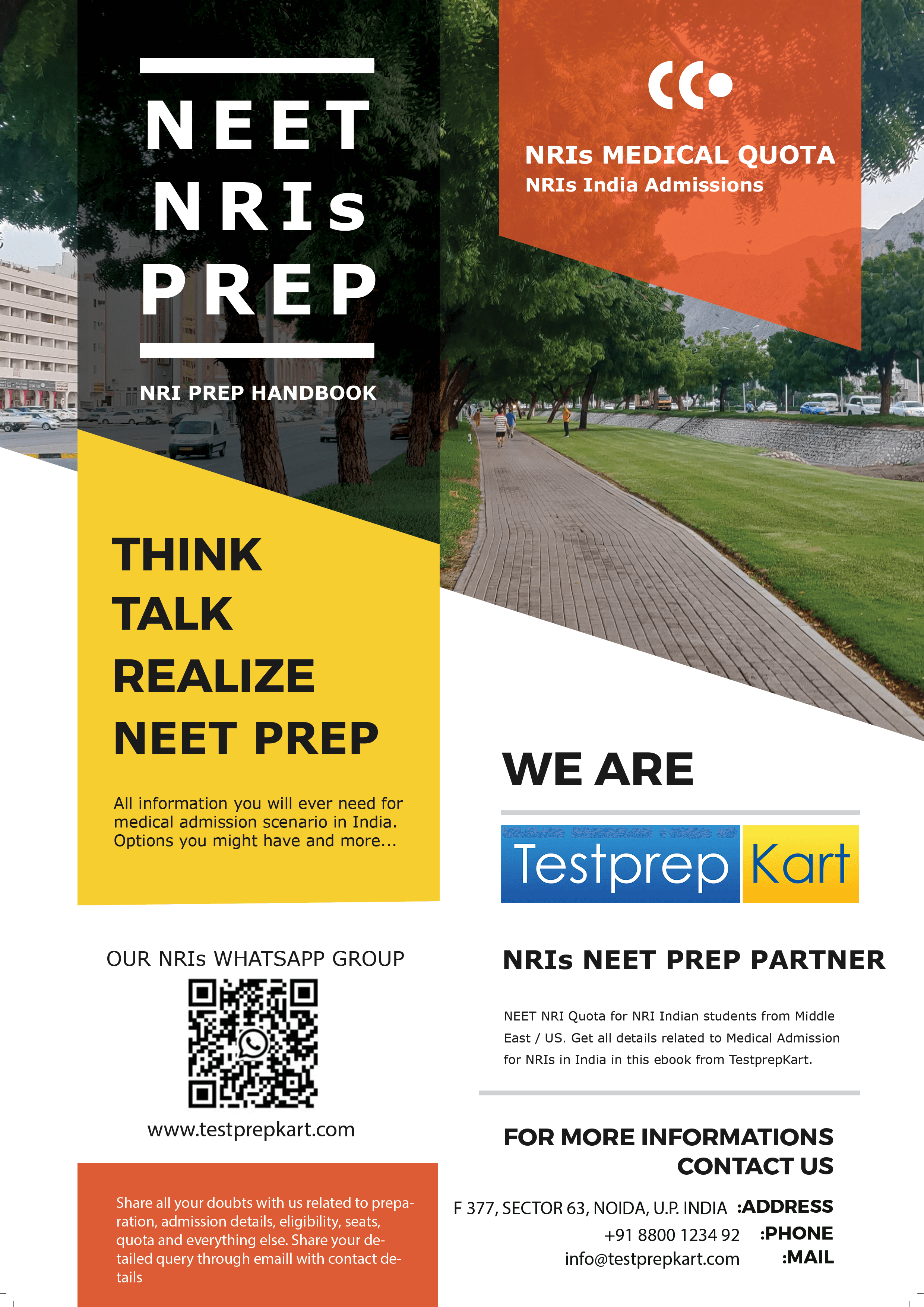
Keep the eBook beside this prerequisites page for pathway mapping after the eligibility matrix is clear.
Download NRI Quota Admission eBook
Checkout few of the app features below.
FAQ
The same core rules as an Indian student for sitting NEET: minimum age 17 by 31 December of the admission year, Physics, Chemistry, Biology or Biotechnology, and English through a recognised Class 12 or equivalent path, and the aggregate marks rule in the bulletin. On top of that, a USA family usually adds passport and nationality accuracy on the NTA form, a plan for AIU or university equivalence when the US board needs it, and a separate counselling file for All India Quota (AIQ) or unpaid merit seats versus paid NRI quota seats.
Age, PCB subjects, English, and the marks rule are shared. The extra work for many USA students is proving that the American Diploma, AP, or IB path equals Indian Class 12 science, locking Physics, Chemistry and Biology together on a US timetable that often splits them, converting GPA or letter grades through formal equivalence instead of a home formula, and preparing embassy or sponsor papers if the family later claims a paid NRI quota seat. An Indian CBSE student usually already has a recognised board marksheet and does not need AIU for a standard CBSE Class 12.
No. All India Quota (AIQ) is usually about 15% of seats in the central MCC pool filled on NEET merit. It is not reserved only for NRI students. Paid NRI quota is a separate category on campuses that publish that row, usually at a much higher fee, with its own document verification. Families often mix the two names. Keep them on separate lists for rank planning and for budget planning.
Yes in many MCC counselling situations, subject to the live brochure. Recent MCC notes treat OCI cardholders as eligible for UR (General) seats as well as NRI seats for counselling conducted by MCC. An Indian-passport NRI who qualifies NEET can also compete on merit for AIQ or other open seats the brochure opens to them. Paid NRI quota is optional and separate. Confirm the live MCC and state rules for your year.
If the child holds a US passport and an OCI card, plan the nationality field as OCI. NRI usually means an Indian passport holder living abroad. A New Jersey ZIP code does not turn an OCI student into an NRI on the form. Enter the child’s passport and citizenship papers, not the city of residence.
No. Ward of NRI or sponsored NRI-category claims ride on the sponsor’s NRI status, allowed relationship, and guardianship or sponsorship proof the brochure asks for. The child can hold an Indian passport, live in India, and never have held OCI. Confirm the live MCC public notice for Academic Year 2026-27 and later years.
PIO is no longer treated as a separate active nationality category for NEET or MBBS planning. The older PIO scheme was merged into the OCI framework. MCC lists may still accept “OCI Card / PIO Card” as supporting papers. Update old PIO-only papers to a current OCI card before registration and counselling.
No. NEET looks for Physics, Chemistry, Biology or Biotechnology, and English through a recognised path, plus the aggregate marks rule. A high GPA without Biology, or without formal equivalence when asked, does not clear the bar.
Clearing NEET opens counselling. An AIQ or other merit seat still depends on rank, category, and round. A paid NRI quota seat needs a second document file (embassy or consulate certificates, sponsor affidavits, relationship proof, NRE evidence where asked) and often MCC NRI document verification before choice filling. Neither seat is automatic from the scorecard alone.
American Diploma, IB, and A-Level families should plan for Association of Indian Universities (AIU) school-level equivalence, or the concerned Indian university named in that year’s notice, whenever formal Class 12 science proof is demanded. For school-awarded US diplomas, AIU policy has required State Department of Education or one of six regional accrediting agencies. Online or distance US diplomas are not accepted under those AIU notes. Start months early.
Do not DIY with a blog chart. AIU or the body named in that year’s notice issues equivalence language counselling can read. Keep diplomas, transcripts, accreditation proof, passport and visa copies ready.
AIU’s published online guidelines have stated about 10 to 15 working days after final submission and fee, longer if Evaluation staff raise queries. Build months of buffer before Round 1.
Physics, Chemistry, Biology or Biotechnology, and English, with lab evidence when asked. Two years of qualifying science aligned to Indian Class 12 expectations is the planning standard. AP Biology without Physics does not invent a full PCB set.
MCC notices point to NRI parents or real brother or sister abroad in cleaner Category I style lists, and wider nearest-relation ward lists (uncles, aunts, grandparents, first-degree cousins) when those persons are NRI, ordinarily abroad, and can prove guardianship and sponsorship. MCC may seek Guardians and Wards Act proof. Fake sponsorship is rejected.
No. Enter passport and citizenship status accurately. Wrong ticks create counselling friction when papers do not match.
At least 17 years on or before 31 December of the admission year you target. Recheck the live NTA bulletin. Recent bulletins have not used an upper age limit.
General planning uses at least 50% aggregate in Physics, Chemistry and Biology or Biotechnology, with practicals as required. Reserved-category relaxations follow that year’s rules. Some colleges ask higher in their own notice.
Use Grade 9-10 to lock PCB choices and build NCERT-style biology vocabulary. Formal full syllabus NEET coverage often starts seriously in Grade 10-11. Also start the category and document calendar early if AIQ and paid NRI both stay on the table.
Harder, not impossible. Need honest gap analysis, heavy mocks, and parallel AIU and embassy work. Do not wait for the score to start documents.
Passport bio pages, OCI if any, birth certificate, full US transcript with course descriptions and labs, school accreditation proof for AIU if needed, parent passport and visa or residence proof, and calendars for AIU and Indian Embassy or Consulate certificates. Add a folder for future AIQ counselling IDs and, if claiming paid NRI, sponsorship affidavits and relationship certificates.
No. They support a US college file and can prove subject depth. They do not replace NEET for MBBS in India and do not create an AIQ or NRI seat by themselves.
MCC notes for recent cycles allow OCI cardholders UR (General) and NRI seats for MCC counselling after the required verification path. State reserved seats can differ. Confirm the live brochure.
Raise it with a counselor and AIU early. School-awarded American diplomas without required accreditation create equivalence risk. Do not discover this in Round 1.
No. That page focuses on bulletin nationality and form rules. This page is the full prerequisites benchmark: India vs USA matrix, curriculum gap, AIQ and paid NRI doors, timelines, checklist, and deep FAQ.
You still need accurate NEET nationality and the papers for counselling registration. You may not need a full paid-NRI sponsor pack if you never select NRI quota. If you keep paid NRI as a backup, prepare that file in parallel so you are not locked out mid-counselling.
None. AIQ depends on merit among eligible applicants for that college and round. Paid NRI depends on merit among eligible NRI-category applicants plus a clean document file. Aim higher than the minimum qualify mark.
Last verified 19 September 2026 against the NTA NEET (UG) 2026 Information Bulletin nationality lines, MCC NRI/OCI counselling notes and the 27 May 2026 NRI candidature notice, and AIU Evaluation Division school-level equivalence guidance. Reconfirm AIQ rules, paid NRI sponsor rules, AIU process, and age/marks lines against the live notices for your admission year.
TestprepKart has guided NRI families through India vs USA eligibility, curriculum gaps, and AIQ versus paid NRI planning for over a decade. Send the passport status, board, grade, and which seat doors you want open.
Copyright © 2024 CounselKart Educational Services Pvt. Ltd.. All Rights Reserved