Schedule Your Free Exam Readiness Analysis Session!




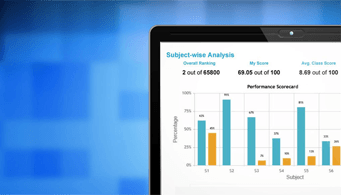
Hi, I’m TestprepKart.
Your Partner In Exam Preparation

Testprepkart’s AP Physics C Mechanics Course course enables deep insights & learning experience.

TestPrepKart’s AP Physics C: Mechanics Elite Program is a structured 20-hour course for Grades 10–12 students aiming for a strong AP score. It combines concept clarity, calculus-based mechanics application, FRQ strategy, and simulated test practice to help students build confidence, improve accuracy, and perform better in the AP Physics C: Mechanics exam.
This program is for students who want a complete, structured AP Physics C: Mechanics preparation journey. It builds conceptual understanding, strengthens calculus-based problem-solving, improves FRQ response quality, and creates better exam confidence within a focused 20-hour system designed to fit around a busy school schedule.
| Program Component | Details |
|---|---|
| Course | AP Physics C: Mechanics |
| Target Grades | 10-12 |
| Total Program Duration | 20 Hours |
| Core Instruction | 15 Hours (10 Sessions × 1.5 Hours) |
| Performance Tests | 5 Hours (5 Simulated Tests × 1 Hour) |
| Delivery Format | Live Interactive + Recorded Access |
| Evaluation Model | AP Rubric-Based Feedback |
| Program Investment | $438 |


Our AP Physics results matter because students and parents are not just looking for classes. They want to know whether preparation is creating real academic improvement. A strong AP Physics C: Mechanics program should make students more confident with calculus-based mechanics, rigorous reasoning, and exam-style response writing under time pressure.
This program is ideal for students who want serious AP Physics C: Mechanics score improvement through structured concept teaching, focused practice, and timed exam exposure.
It helps students who understand classroom mechanics but need stronger AP-level execution in MCQs, FRQs, and calculus-based reasoning questions.
It supports students who want stronger analytical thinking for future engineering, physics, mathematics, and science-related college pathways.
This program is not only about formula memorization. It helps students understand the physical meaning behind equations and how to apply calculus-based reasoning properly in different mechanics situations.
Students learn how AP Physics C: Mechanics answers are evaluated so they can improve their written reasoning, mathematical setup, and physical explanation.
The program helps identify repeated issues in setup, sign convention, calculus usage, graph interpretation, and conceptual logic so students can fix them before the exam.
Mock tests help students become more comfortable with timing, wording, and the rigorous mixed-format nature of the AP Physics C: Mechanics exam.
| Coverage Area | What Students Build |
|---|---|
| Kinematics | Understanding motion through position, velocity, acceleration, graphs, and calculus-based relationships. |
| Newton’s Laws Of Motion | Clear command of force analysis, free-body diagrams, and system-based reasoning. |
| Work, Energy, And Power | Strong understanding of work-energy ideas, conservation, and calculus-based energy relationships. |
| Systems Of Particles And Momentum | Confidence with impulse, momentum conservation, collisions, and center-of-mass reasoning. |
| Rotation | Conceptual clarity in torque, rotational kinematics, rotational dynamics, and angular momentum. |
| Oscillations And Gravitation | Better understanding of simple harmonic motion, universal gravitation, and system behavior. |
| FRQ Strategy | Rubric-aware writing, mathematical setup, explanation structure, and stronger AP answer quality. |
Students develop a clearer and more durable understanding of calculus-based mechanics ideas instead of relying on short-term memorization.
They learn how to explain physical reasoning properly using the structure expected in AP Physics C: Mechanics FRQs.
They become more stable in timing, interpretation, and decision-making during the exam.
A structured AP Physics C: Mechanics program helps students move beyond memorizing formulas. It gives them enough time to learn concepts, apply calculus in context, write stronger responses, and improve through feedback and repetition. That is the difference between just attending classes and becoming exam ready.
One of the biggest advantages of a focused AP Physics C: Mechanics preparation cycle is that the student is not only preparing for one test date. They are also learning how to analyze systems, interpret graphs, connect derivatives and integrals to motion, and communicate physical ideas clearly. These are skills that continue to matter in future STEM coursework.
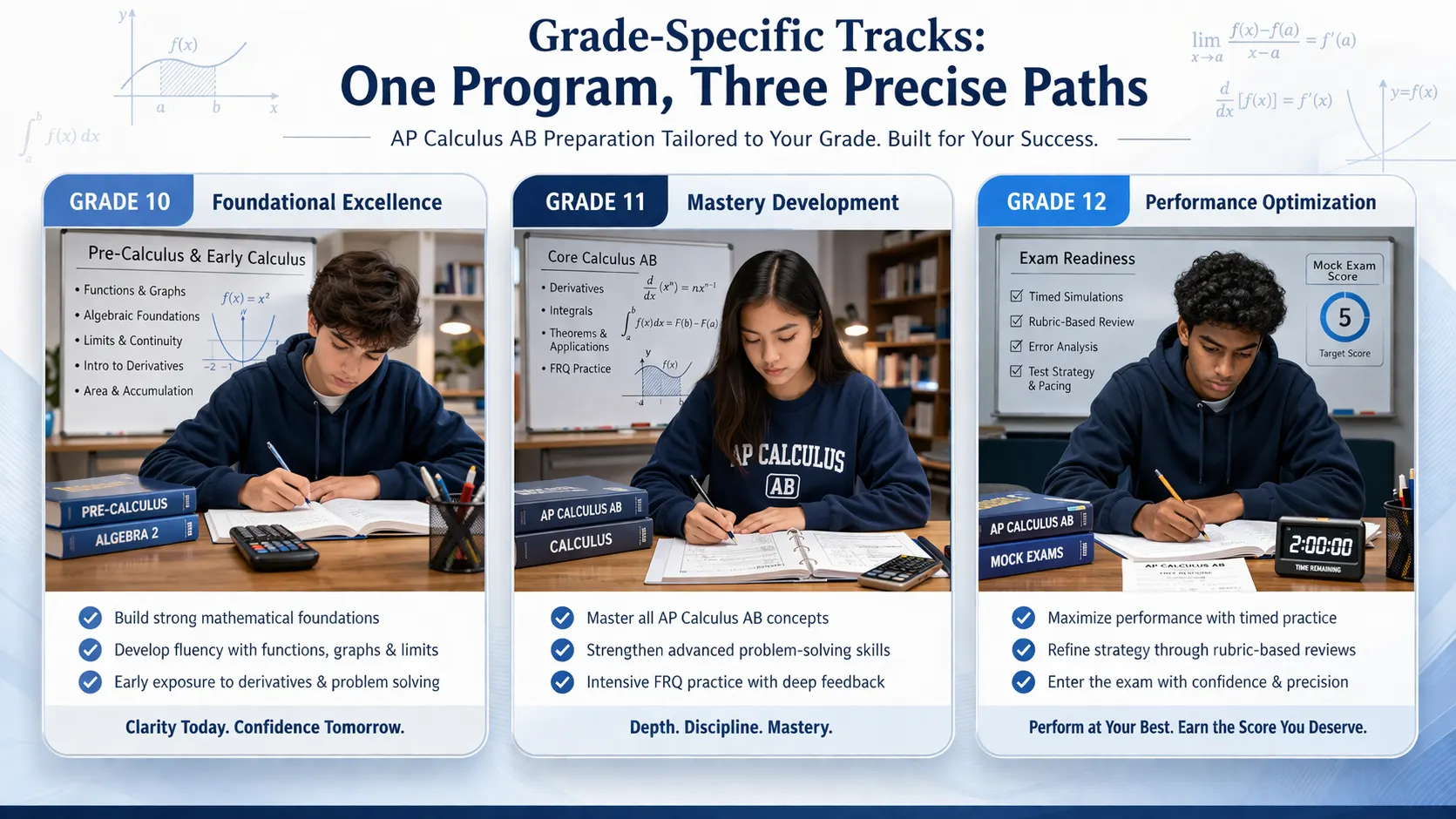
Many students understand classroom mechanics but struggle with exam wording, multi-step reasoning, and FRQ explanations. This program closes that gap through structure and practice.
Students who feel lost between school assignments, AP preparation, and exam expectations benefit from a course that organizes what to focus on and how to improve steadily.
Students need repeated exposure to timed conditions to become more consistent. These simulations help reduce panic, improve pacing, and show which parts of the exam still need work.
Each test helps identify whether performance is being limited by weak understanding, poor setup, weak explanation, or timing pressure. That makes future study more focused and productive.
Free Response Questions in AP Physics C: Mechanics are not only about finding the correct numerical answer. They are also about choosing the right concept, building the correct mathematical setup, explaining logic clearly, and connecting evidence to physics reasoning. This program helps students understand how AP scoring works and how to earn more marks through better explanation and cleaner structure.

Parents often want to know whether preparation is leading to real academic improvement or just more study hours. This program makes growth more visible through repeated testing and clearer evaluation.
When the preparation system is organized, home conversations become less stressful. Parents can better support the student because progress and next steps are easier to understand.
 |
 |
 |
 |
 |
 |
|
|
Students can ask doubts in real time, interact with the teacher, and receive immediate guidance while learning challenging AP Physics C: Mechanics concepts and applications.
Students can revisit difficult sessions, review key explanations, and revise before tests. This is especially valuable for rotational motion, momentum systems, oscillations, and FRQ reasoning questions.
Students become more confident in reading mechanical systems carefully and drawing more reasoned conclusions from physical evidence.
They stop approaching mechanics as only formulas and begin approaching it with understanding and discipline.
The habits built here support future work in physics, engineering, mathematics, and STEM-heavy college courses.
Families choose structured AP preparation because strong AP performance is rarely about intelligence alone. It is about systems, accountability, repeated practice, and knowing how to turn effort into marks. A good course removes confusion and gives the student a preparation framework they can trust.
| Program Layer | What Happens Here | Student Benefit |
|---|---|---|
| Core Concept Learning | Students build understanding of AP Physics C: Mechanics topics through guided teaching and examples | Stronger foundations and better conceptual clarity across the syllabus |
| Guided Practice | Students apply each concept in structured question sets with teacher support | Better retention and improved ability to solve questions independently |
| Mixed Application | Students solve questions that combine mechanics concepts with calculus-based reasoning | Greater flexibility and stronger real exam readiness |
| FRQ Strategy Training | Students learn scoring logic, explanation quality, and common response pitfalls | Better written performance and stronger rubric alignment |
| Timed Simulations | Students practice under realistic AP exam conditions | Reduced test-day stress and stronger time management |
| Performance Analytics | Feedback from tests identifies strengths and areas for targeted improvement | More focused revision and smarter preparation decisions |
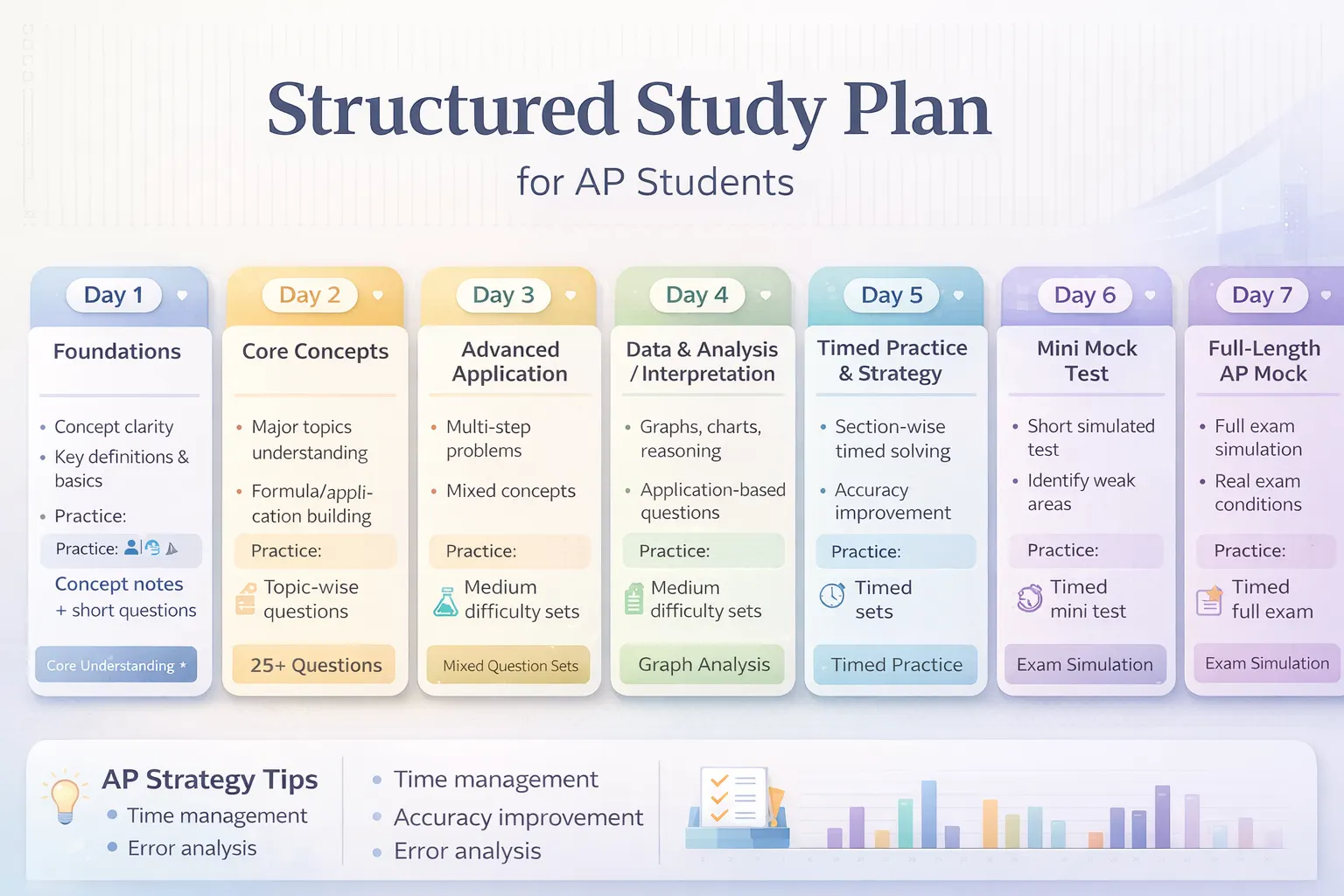
| Study Material Area | Purpose | How Students Use It |
|---|---|---|
| Concept Notes | Simplify key laws, formulas, calculus links, graph ideas, and conceptual patterns | Used for pre-class revision and quick recap before practice |
| Topic-Wise Practice | Strengthen one mechanics area at a time through focused repetition | Used immediately after learning so concepts stay fresh and clear |
| Mixed Sets | Improve switching ability across different AP Physics C question types | Used after basic comfort is built so students can handle varied exam-style questions |
| FRQ Practice Sets | Develop rubric-aligned explanation, math setup, and structured answer writing | Used across the course with increasing confidence and timed pressure |
| Mock Tests | Simulate realistic AP exam performance under timed conditions | Used as readiness checks and full performance reflections |
| Error Logs | Help students stop repeating careless and conceptual mistakes | Used to track patterns and guide more focused review sessions |


Families are not only searching for a class. They are searching for direction. A strong AP Physics C: Mechanics program should help students move from confusion to structure, from memorizing formulas to understanding rigorous mechanical ideas, and from vague score hopes to confident exam-day performance.
"Before joining TestPrepKart, I found AP Physics C: Mechanics confusing because I did not know how to connect concepts, calculus, and equations properly. The structured teaching and FRQ practice made a huge difference, and I became much more confident with rigorous reasoning questions."
"The program helped me understand mechanics beyond formulas. The mock tests improved my pacing, and the feedback showed me exactly where I needed to improve. I felt much more ready by the final exam."
"TestPrepKart helped me understand AP Physics C: Mechanics in a much more organized way. The explanations were clear, and the practice sessions taught me how to write stronger answers. I scored a 5 and felt much more confident in mechanics reasoning."
"The structure of the course made a big difference for me. I improved most in rotational motion, momentum systems, and FRQ writing. The mock tests and feedback helped me reduce mistakes and manage the exam much better."
This program is best for students in Grades 10, 11, and 12 who want a complete, structured AP Physics C: Mechanics preparation system. It is especially useful for students who want concept clarity, stronger problem-solving skills, calculus-based FRQ strategy support, simulated tests, and more visible improvement before the AP exam.
The core instruction component consists of 10 live interactive sessions, each 1.5 hours long, totaling 15 hours of guided teaching. The performance test component consists of 5 AP-style simulated tests, each 1 hour long with rubric-based feedback, totaling 5 hours. The complete program is 20 hours in total.
The program includes 15 hours of live interactive core instruction, 5 simulated AP-style tests, full recorded access, rubric-based feedback, doubt support, structured study planning, and a complete AP Physics C: Mechanics exam-oriented preparation framework.
Yes. That is one of the most common student profiles this program is designed for. It helps students convert school-level understanding into better AP exam performance through structure, timing practice, and stronger response-writing habits.
Yes. AP Physics C: Mechanics develops analytical thinking, scientific reasoning, calculus-based interpretation, and structured problem-solving skills that continue to matter in physics, engineering, mathematics, and many college-level STEM courses.
The program is delivered through live interactive online classes with recorded access included. Students can ask questions during the class and revisit any session later for deeper revision and stronger understanding.
Yes. The structure of the program makes progress easier to understand through repeated testing, clearer feedback, and stronger academic visibility. Parents can better see whether the student is becoming more ready for the exam.
The AP Physics C: Mechanics Elite Preparation Program — 20 hours total, 15 hours of core instruction across 10 sessions of 1.5 hours each, 5 simulated tests, live interactive classes with recorded access, and AP rubric-based feedback — is built for families who want stronger concept clarity, better calculus-based application, improved FRQ performance, and a stable path toward a high AP score. At $438, this is a focused and structured preparation system for serious AP Physics C: Mechanics performance.
Copyright © 2024 CounselKart Educational Services Pvt. Ltd.. All Rights Reserved