





Hi, I’m TestprepKart.
Your Partner In Exam Preparation
AP Math (Calculus AB, Calculus BC, and Statistics) is one of the most impactful subjects for students applying to competitive universities in the U.S., Canada, and beyond. It demonstrates not only mathematical strength but also the ability to handle college-level problem-solving and analytical reasoning while still in high school.
For USAn and NRI students, AP Math can be the difference between blending into the applicant pool and standing out. With AP Math Preparation Online, students gain structured preparation, flexible learning schedules, and targeted strategies designed to maximize their performance and boost college applications.
There are three AP math courses:
Advanced Placement (AP) Calculus (also known as AP Calc, Calc AB / BC, AB / BC Calc, or simply AB / BC) is a collection of two different Advanced Placement calculus courses and tests provided by the American nonprofit organization College Board.
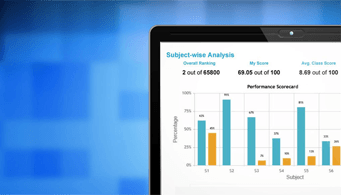
Schedule Free AP Math Analysis Session

| Benefit | Details |
| Personalized Guidance | 1-on-1 support from AP Math AP-certified tutors who identify your weak areas and build a targeted plan. |
| Topic-Wise Coverage | Complete coverage of AP Calculus AB, Calculus BC, and Statistics topics. |
| Exam-Oriented Practice | Training with College Board–style multiple-choice and free-response questions. |
| Time-Zone Flexibility | Preparation aligned to USAn and NRI students’ schedules. |
| Bridge Curriculum Gaps | Supports students from CBSE/ICSE/IB/IGCSE who may not have studied advanced calculus/statistics yet. |
| Score-Boosting Strategies | Time management, calculator usage, and question prioritization. |
| Application Integration | Guidance on how to highlight AP Math achievements in college essays and applications. |
Our experienced AP Math AP-certified tutors offers a free one-on-one analysis session where we assess your strengths, weaknesses, and build a customized preparation strategy
AP Calculus AB
AP Calculus AB is an Advanced Placement Calculus subject. It is generally taken after precalculus and is the first calculus course given by most schools, with the exception of a normal or honors calculus class. The Pre-Advanced Placement track in math helps students prepare for additional Advanced Placement coursework and tests.
Units and chapters covered
| Unit | Topics Covered |
| Unit 1: Limits and Continuity | – Definition of a limit- Limit laws- Continuity and the Intermediate Value Theorem- Limits involving infinity |
| Unit 2: Derivatives | – Definition and interpretation of the derivative- Differentiation rules (power, product, quotient, chain)- Implicit differentiation- Related rates- Mean Value Theorem |
| Unit 3: Applications of Derivatives | – Tangent lines- Velocity and acceleration- Optimization problems- Linear approximation and differentials |
| Unit 4: Integrals | – Definition and interpretation of the definite integral- Fundamental Theorem of Calculus- Integration techniques (substitution, integration by parts)- Area under curves- Average value of a function |
| Unit 5: Applications of Integrals | – Area between curves- Volume of solids of revolution (disk and washer methods)- Work and other applications of integration |
| Unit 6: Differential Equations | – Slope fields and solutions to differential equations- Separation of variables- Exponential growth and decay |
| Unit 7: Polynomial Approximations and Series | – Power series- Taylor and Maclaurin series |
| Score | 2017 | 2018 | 2019 | 2020 | 2021 | 2022 | 2023 | 2024 |
| 5 | 18.70% | 19.40% | 19.10% | 19.50% | 17.60% | 20.40% | 22.40% | 21% |
| 4 | 18% | 17.30% | 18.70% | 20.90% | 14.10% | 16.10% | 16.20% | 28% |
| 3 | 20.80% | 21% | 20.60% | 21.00% | 19.30% | 19.10% | 19.40% | 15% |
| 2 | 22% | 22.40% | 23.30% | 24.10% | 25.30% | 22.60% | 21.70% | 23% |
| 1 | 20.40% | 20% | 18.30% | 14.50% | 23.70% | 21.70% | 20.30% | 13% |
| % of Scores 3 or Higher | 57.50% | 57.70% | 58.40% | 61.40% | 51.00% | 55.70% | 58.00% | 64% |
| Mean | 2.93 | 2.94 | 2.97 | 3.07 | 2.77 | 2.91 | 2.99 | 3.21 |
| Standard Deviation | 1.4 | 1.4 | 1.38 | 1.36 | 1.41 | 1.44 | 1.44 | 1.35 |
| Number of Students | 316,099 | 308,538 | 300,659 | 266,430 | 251,639 | 268,352 | 273,987 |
AP Calculus BC
AP Calculus BC is comparable to a full-year standard college course that includes Calculus I and II. After passing the exam, students may proceed to Calculus III.
Units
| Unit | Topics Covered |
| Unit 8: Parametric, Polar, and Vector Functions | – Parametric equations and their derivatives- Polar coordinates and equations- Vector functions and their derivatives |
| Unit 9: Infinite Sequences and Series | – Convergence and divergence of sequences- Convergence tests for series (ratio, root, comparison, etc.)- Taylor series, Maclaurin series, and error estimation |
| Score | 2017 | 2018 | 2019 | 2020 | 2021 | 2022 | 2023 | 2024 |
| 5 | 42.60% | 40.40% | 43.00% | 44.60% | 38.30% | 41.20% | 43.50% | 45% |
| 4 | 18.10% | 18.60% | 18.50% | 17.60% | 16.50% | 15.60% | 15.90% | 22% |
| 3 | 19.90% | 20.70% | 19.50% | 19.40% | 20.40% | 20.10% | 19.00% | 13% |
| 2 | 14.30% | 14.60% | 13.90% | 14.10% | 18.20% | 16.40% | 15.20% | 15% |
| 1 | 5.30% | 5.60% | 5.20% | 4.30% | 6.60% | 6.80% | 6.30% | 5% |
| % of Scores 3 or Higher | 80.60% | 79.70% | 81.00% | 81.60% | 75.20% | 76.90% | 78.50% | 80% |
| Mean | 3.79 | 3.73 | 3.81 | 3.84 | 3.62 | 3.68 | 3.75 | 3.87 |
| Standard Deviation | 1.28 | 1.28 | 1.27 | 1.25 | 1.33 | 1.33 | 1.32 | 1.27 |
| Number of Students | 132,514 | 139,376 | 139,195 | 127,864 | 124,599 | 120,238 | 135,458 |
AP Statistics Syllabus
AP Statistics teaches data analysis, probability theory, and statistical inference to help students make sense of real-world data.
| Unit | Topics Covered |
| Unit 1: Exploring Data | – Describing patterns in data: distributions, shape, center, spread- Graphical displays: histograms, box plots, scatterplots- Measures of center: mean, median- Measures of spread: range, IQR, standard deviation |
| Unit 2: Sampling and Experimentation | – Types of sampling methods: random, stratified, cluster- Bias in sampling- Sampling distributions- Experimental design: control, randomization, and blinding- Ethical considerations in experiments |
| Unit 3: Probability | – Basic probability rules: addition and multiplication rules- Conditional probability and independence- Random variables and probability distributions- Binomial and geometric distributions- Law of Large Numbers and Central Limit Theorem |
| Unit 4: Statistical Inference | – Estimating population parameters: confidence intervals for means and proportions- Hypothesis testing for means and proportions- P-values, significance level, and errors in hypothesis testing- One-sample t-tests and z-tests |
| Unit 5: More Statistical Inference | – Two-sample inference: comparing means and proportions- Inference for regression models- Chi-squared tests for goodness-of-fit, homogeneity, and independence |
| Unit 6: Analysis of Variance (ANOVA) | – One-way ANOVA: testing for differences among group means- Assumptions of ANOVA- Post-hoc tests following ANOVA- F-distribution and interpretation of results |
Exam Format
The structures of the AB and BC tests are identical. Both tests are three hours and fifteen minutes long, with 45 multiple-choice questions and six free answer questions. They are typically administered on a Monday or Tuesday morning in May.
| Multiple-Choice, Section I Part A | Multiple-Choice, Section I Part B | Free-Response, Section II Part A | Free-Response, Section II Part B | |
| # of Questions | 30 | 15 | 2 | 4 |
| Time Allowed | 60 minutes | 45 minutes | 30 minutes | 60 minutes |
| Calculator Use | No | Yes | Yes | No |
AP Mathematics Scoring System
| Aspect | AP Calculus AB | AP Calculus BC | AP Statistics |
| Section I: Multiple-Choice | 45 questions, 90 minutes | 45 questions, 90 minutes | 40 questions, 90 minutes |
| Scoring for Multiple-Choice | 1 point for each correct answer (no penalty for incorrect) | 1 point for each correct answer (no penalty for incorrect) | 1 point for each correct answer (no penalty for incorrect) |
| Section II: Free-Response | 6 questions (2 long, 4 short), 90 minutes | 6 questions (2 long, 4 short), 90 minutes | 6 questions, 90 minutes |
| Scoring for Free-Response | Based on accuracy, reasoning, and explanation | Based on accuracy, reasoning, and explanation | Based on correctness, application, and justification |
| Weighting of Each Section | Multiple-Choice: 50%, Free-Response: 50% | Multiple-Choice: 50%, Free-Response: 50% | Multiple-Choice: 50%, Free-Response: 50% |
| Raw Score Calculation | Combined score from both sections | Combined score from both sections | Combined score from both sections |
| Final Scaled Score Range | 1 to 5 | 1 to 5 | 1 to 5 |
| Score Descriptions | 5: Extremely well-qualified4: Well-qualified3: Qualified2: Possibly qualified1: No recommendation | 5: Extremely well-qualified4: Well-qualified3: Qualified2: Possibly qualified1: No recommendation | 5: Extremely well-qualified4: Well-qualified3: Qualified2: Possibly qualified1: No recommendation |
AP Math is not just another course—it’s a signal of academic rigor, resilience, and college readiness. For USAn and NRI students, excelling in AP Math through online preparation can lead to stronger college applications, early credits, and a smoother transition into demanding university majors.
Choosing AP Math Preparation Online means preparing smartly, studying flexibly, and positioning yourself for success in 2026 and beyond.
Copyright © 2024 CounselKart Educational Services Pvt. Ltd.. All Rights Reserved


Post a Comment