NEET Biology Questions Download PDF - Chapter-Wise MCQs With Solutions
Get NEET Biology question papers, review Biology of Class 11 & 12, practice 36 NEET question model MCQs with answers, and get revision notes for Biology with a 100 question resource and previous year question papers all in one place.
Biology was worth 360 marks in the NEET UG 2026 examination. The 2027 pattern should be checked when officially published.
Download NEET Biology Questions PDF for Free
Start with the resource matching your task. For chapter practice, use Biology MCQs. For rapid revision, open Biology Revision Notes. For a longer test, select the listed 100 Important Biology Questions With Solutions resource. The library may ask you to complete a form before accessing a file.
RESOURCE 01
Biology MCQs PDF
Use the Multiple Choice Questions in Biology section of your website. Select the Biology MCQs file under Study Material.
Download availability: These links will lead you to trusted resource collections from TestPrepKart. The headings in the chapter below do not necessarily imply that the individual chapters are available in PDF format. The page also includes a worksheet with 36 questions, which is available individually.
NEET Biology Chapter-Wise Question PDF Finder
Choose Botany or Zoology first, then find the corresponding MCQ or notes entry in TestPrepKart’s verified download library. Chapter names below are a learning map; the library is not being represented as a collection of individual verified chapter PDFs.
The published NEET UG 2026 pattern had 180 compulsory MCQs overall, including 90 Biology questions. The table below is provided for planning; it is not a prediction of the 2027 pattern.
Section
2026 questions
Maximum marks
Practice note
Biology (Botany + Zoology)
90
360
+4 correct, -1 incorrect, 0 unanswered
Physics
45
180
2026 reference only
Chemistry
45
180
2026 reference only
A good way to learn Biology is by studying the concept thoroughly from the book, and at the same time doing practice through MCQs. It is important to choose the correct option and give reasons why other three options are wrong. This method will be useful for answering statement, comparison, and classification questions.
NEET Class 11 Biology Questions PDF – Chapter-Wise Practice
Class 11 chapters have been classified into units according to the syllabus of Biology. This is just for guidance and does not imply that there is an individually verifiable PDF version for each chapter.
2026 syllabus unit
Related Class 11 chapter/topic map
Question types to practise
Main area
Diversity in Living World
The Living World; Biological Classification; Plant Kingdom; Animal Kingdom
Taxonomy, kingdom comparisons, characteristics and examples
Botany + Zoology
Structural Organisation in Animals and Plants
Morphology and Anatomy of Flowering Plants; animal tissues, insect and frog
Cell: The Unit of Life; Biomolecules; Cell Cycle and Cell Division
Organelles, enzymes, mitosis and meiosis
Botany
Plant Physiology
Photosynthesis in Higher Plants; Respiration in Plants; Plant Growth and Development
C3/C4 pathways, respiration stages, hormones
Botany
Human Physiology
Breathing and Exchange of Gases; Body Fluids and Circulation; Excretion; Locomotion; Neural Control; Chemical Coordination
Heart, nephron, nerves, hormones, muscle
Zoology
Class 11 Biology Download Plan
In Cell Biology, first study about functions of organelles and differentiate between prokaryotic and eukaryotic cells before answering statement type questions. In Plant Physiology, first draw flow charts of photosynthesis and respiration process from memory. In Human Physiology, revise diagrams one by one; heart, nephron, neuron and sarcomere before taking MCQs.
Class 12 Biology connects processes across chapters. Keep a table of similar-sounding terms - autogamy versus geitonogamy, incomplete dominance versus codominance, active versus passive immunity - and practise the differences using questions.
2026 syllabus unit
Related Class 12 chapters
Question types to practise
Main area
Reproduction
Sexual Reproduction in Flowering Plants; Human Reproduction; Reproductive Health
Embryo sac, double fertilisation, hormones, reproductive health
Botany + Zoology
Genetics and Evolution
Principles of Inheritance and Variation; Molecular Basis of Inheritance; Evolution
Human Health and Disease; Microbes in Human Welfare
Immunity, pathogens, useful microbes and applications
Zoology + Botany
Biotechnology and Its Applications
Biotechnology: Principles and Processes; Biotechnology and Its Applications
PCR, restriction enzymes, vectors, applications
Botany
Ecology and Environment
Organisms and Populations; Ecosystem; Biodiversity and Conservation
Interactions, food chains, population graphs, conservation
Botany + Zoology
Class 12 Biology Revision Tips
For Genetics, write genotype and phenotype ratios before selecting an option. For Molecular Biology, keep strand direction, codons and enzyme functions straight. For Biotechnology, connect each tool to its purpose rather than memorising only names. For Ecology, distinguish energy flow from nutrient cycling.
Planning NEET and MBBS admission while living abroad?
The free TestPrepKart NEET guide will help you learn about eligibility criteria, documents required, study plan and MBBS admissions process. The Biology preparation is just one step in the process; begin with your admission process as soon as possible.
36 NEET Biology MCQs With Answers and Explanations
These are 36 original NEET-style practice questions created for this resource page, not copied official NEET previous-year questions. Choose any option (A–D) to reveal whether it is correct. If you choose incorrectly, the correct choice is shown; open that choice for the full explanation. Each option opens independently, so close one before trying another.
Suggested practice: Complete Q1–18 for Class 11 and Q19–36 for Class 12. Using the 2026 marking reference, award +4 for a correct answer, -1 for an incorrect one and 0 for a skipped question. Do not use the full key until after your first attempt.
Q01. Which substance forms the main structural component of most fungal cell walls?
A. Cellulose
Not quite. The correct answer is B. Chitin. Select option B to see the full explanation and common-mistake tip.
B. Chitin
Correct selection.Correct answer: B. Chitin
Explanation: Fungal walls typically contain chitin and other polysaccharides, unlike the cellulose-rich walls of most plants.
Avoid this mistake: Do not confuse fungal cell walls with those of plants or bacteria.
C. Peptidoglycan
Not quite. The correct answer is B. Chitin. Select option B to see the full explanation and common-mistake tip.
D. Silica
Not quite. The correct answer is B. Chitin. Select option B to see the full explanation and common-mistake tip.
BOTANY · CLASS 11 · Plant Kingdom · MEDIUM · Q02
Q02. Why is external water generally needed for fertilisation in bryophytes?
A. Their pollen tubes need water
Not quite. The correct answer is B. Their male gametes are motile and swim to the egg. Select option B to see the full explanation and common-mistake tip.
B. Their male gametes are motile and swim to the egg
Correct selection.Correct answer: B. Their male gametes are motile and swim to the egg
Explanation: Bryophyte sperm are flagellated and require a thin film of water to reach the female reproductive structure.
Avoid this mistake: Bryophytes do not produce pollen or seeds.
C. Their seeds germinate only in water
Not quite. The correct answer is B. Their male gametes are motile and swim to the egg. Select option B to see the full explanation and common-mistake tip.
D. Their embryos develop inside water-filled fruits
Not quite. The correct answer is B. Their male gametes are motile and swim to the egg. Select option B to see the full explanation and common-mistake tip.
BOTANY · CLASS 11 · Plant Kingdom · EASY · Q03
Q03. Which leaf-venation pattern is generally associated with monocotyledonous flowering plants?
A. Parallel venation
Correct selection.Correct answer: A. Parallel venation
Explanation: Monocot leaves such as those of grasses generally have parallel venation.
Avoid this mistake: Use "generally": there are exceptions to broad morphology patterns.
B. Reticulate venation
Not quite. The correct answer is A. Parallel venation. Select option A to see the full explanation and common-mistake tip.
C. Dichotomous venation in all leaves
Not quite. The correct answer is A. Parallel venation. Select option A to see the full explanation and common-mistake tip.
D. Absence of veins
Not quite. The correct answer is A. Parallel venation. Select option A to see the full explanation and common-mistake tip.
BOTANY · CLASS 11 · Morphology of Flowering Plants · EASY · Q04
Q04. The typical fruit of a pea plant is a:
A. Capsule
Not quite. The correct answer is C. Legume. Select option C to see the full explanation and common-mistake tip.
B. Berry
Not quite. The correct answer is C. Legume. Select option C to see the full explanation and common-mistake tip.
C. Legume
Correct selection.Correct answer: C. Legume
Explanation: Pea belongs to Fabaceae; its characteristic fruit is a legume or pod, usually splitting along two sutures.
Avoid this mistake: A pod is a fruit, not a seed.
D. Drupe
Not quite. The correct answer is C. Legume. Select option C to see the full explanation and common-mistake tip.
BOTANY · CLASS 11 · Anatomy of Flowering Plants · EASY · Q05
Q05. Which plant tissue principally conducts water and dissolved mineral ions upward?
A. Phloem
Not quite. The correct answer is B. Xylem. Select option B to see the full explanation and common-mistake tip.
B. Xylem
Correct selection.Correct answer: B. Xylem
Explanation: Xylem vessels and tracheids carry water and dissolved minerals through the plant.
Avoid this mistake: Phloem mainly transports organic food substances.
C. Cork
Not quite. The correct answer is B. Xylem. Select option B to see the full explanation and common-mistake tip.
D. Collenchyma
Not quite. The correct answer is B. Xylem. Select option B to see the full explanation and common-mistake tip.
BOTANY · CLASS 11 · Cell: The Unit of Life · EASY · Q06
Q06. Which feature is absent from a typical prokaryotic cell?
A. Plasma membrane
Not quite. The correct answer is C. Membrane-bound nucleus. Select option C to see the full explanation and common-mistake tip.
B. Ribosomes
Not quite. The correct answer is C. Membrane-bound nucleus. Select option C to see the full explanation and common-mistake tip.
C. Membrane-bound nucleus
Correct selection.Correct answer: C. Membrane-bound nucleus
Explanation: Prokaryotes have DNA but do not enclose it within a nuclear membrane.
Avoid this mistake: A prokaryote still contains ribosomes and a cell membrane.
D. Genetic material
Not quite. The correct answer is C. Membrane-bound nucleus. Select option C to see the full explanation and common-mistake tip.
BOTANY · CLASS 11 · Cell: The Unit of Life · MEDIUM · Q07
Q07. The fluid mosaic model describes a cell membrane mainly as:
A. A rigid sheet of carbohydrates
Not quite. The correct answer is D. A lipid bilayer with embedded or associated proteins. Select option D to see the full explanation and common-mistake tip.
B. A single layer of proteins
Not quite. The correct answer is D. A lipid bilayer with embedded or associated proteins. Select option D to see the full explanation and common-mistake tip.
C. A solid protein coat around DNA
Not quite. The correct answer is D. A lipid bilayer with embedded or associated proteins. Select option D to see the full explanation and common-mistake tip.
D. A lipid bilayer with embedded or associated proteins
Correct selection.Correct answer: D. A lipid bilayer with embedded or associated proteins
Explanation: Cell membranes have a phospholipid bilayer with proteins that can be integral or peripheral.
Avoid this mistake: Membranes are dynamic rather than completely rigid.
BOTANY · CLASS 11 · Cell: The Unit of Life · EASY · Q08
Q08. The primary site of protein synthesis in a cell is the:
A. Ribosome
Correct selection.Correct answer: A. Ribosome
Explanation: Ribosomes translate mRNA into polypeptide chains, whether free in the cytosol or associated with rough ER.
Avoid this mistake: Golgi apparatus modifies and sorts proteins but does not translate mRNA.
B. Lysosome
Not quite. The correct answer is A. Ribosome. Select option A to see the full explanation and common-mistake tip.
C. Centrosome
Not quite. The correct answer is A. Ribosome. Select option A to see the full explanation and common-mistake tip.
D. Golgi cisterna
Not quite. The correct answer is A. Ribosome. Select option A to see the full explanation and common-mistake tip.
BOTANY · CLASS 11 · Cell Cycle and Cell Division · MEDIUM · Q09
Q09. During which phase of the eukaryotic cell cycle is nuclear DNA replicated?
A. G1
Not quite. The correct answer is B. S. Select option B to see the full explanation and common-mistake tip.
B. S
Correct selection.Correct answer: B. S
Explanation: DNA synthesis occurs in S phase, between G1 and G2 of interphase.
Avoid this mistake: M phase is principally chromosome segregation and cell division.
C. G2
Not quite. The correct answer is B. S. Select option B to see the full explanation and common-mistake tip.
D. M
Not quite. The correct answer is B. S. Select option B to see the full explanation and common-mistake tip.
BOTANY · CLASS 11 · Biomolecules · MEDIUM · Q10
Q10. Enzymes generally increase the rate of biochemical reactions by:
A. Increasing the equilibrium constant
Not quite. The correct answer is D. Lowering the activation energy. Select option D to see the full explanation and common-mistake tip.
B. Being consumed permanently
Not quite. The correct answer is D. Lowering the activation energy. Select option D to see the full explanation and common-mistake tip.
C. Increasing the activation energy
Not quite. The correct answer is D. Lowering the activation energy. Select option D to see the full explanation and common-mistake tip.
D. Lowering the activation energy
Correct selection.Correct answer: D. Lowering the activation energy
Explanation: Enzymes stabilise transition states and lower the activation-energy barrier; they do not change the reaction equilibrium.
Avoid this mistake: An enzyme is usually regenerated after the reaction.
BOTANY · CLASS 11 · Photosynthesis in Higher Plants · MEDIUM · Q11
Q11. The primary carbon dioxide acceptor in the initial fixation step of C4 photosynthesis is:
A. RuBP
Not quite. The correct answer is C. Phosphoenolpyruvate (PEP). Select option C to see the full explanation and common-mistake tip.
B. Oxaloacetic acid
Not quite. The correct answer is C. Phosphoenolpyruvate (PEP). Select option C to see the full explanation and common-mistake tip.
C. Phosphoenolpyruvate (PEP)
Correct selection.Correct answer: C. Phosphoenolpyruvate (PEP)
Explanation: PEP accepts CO2 (as bicarbonate) in mesophyll cells to form a four-carbon product; RuBP acts in the Calvin cycle.
Avoid this mistake: Do not confuse the initial C4 fixation step with the Calvin cycle.
D. 3-phosphoglyceric acid
Not quite. The correct answer is C. Phosphoenolpyruvate (PEP). Select option C to see the full explanation and common-mistake tip.
BOTANY · CLASS 11 · Photosynthesis in Higher Plants · MEDIUM · Q12
Q12. The oxygen released during oxygenic photosynthesis originates directly from:
A. Carbon dioxide
Not quite. The correct answer is B. Water. Select option B to see the full explanation and common-mistake tip.
B. Water
Correct selection.Correct answer: B. Water
Explanation: Water is split by the oxygen-evolving complex of photosystem II, releasing electrons, protons and O2.
Avoid this mistake: The oxygen in released O2 does not originate directly from CO2.
C. Glucose
Not quite. The correct answer is B. Water. Select option B to see the full explanation and common-mistake tip.
D. Chlorophyll
Not quite. The correct answer is B. Water. Select option B to see the full explanation and common-mistake tip.
BOTANY · CLASS 11 · Respiration in Plants · EASY · Q13
Q13. In eukaryotic cells, the Krebs (citric acid) cycle operates mainly in the:
A. Mitochondrial matrix
Correct selection.Correct answer: A. Mitochondrial matrix
Explanation: The citric acid cycle enzymes mainly function in the mitochondrial matrix.
Avoid this mistake: Glycolysis, not the Krebs cycle, takes place in the cytosol.
B. Cytosol
Not quite. The correct answer is A. Mitochondrial matrix. Select option A to see the full explanation and common-mistake tip.
C. Thylakoid lumen
Not quite. The correct answer is A. Mitochondrial matrix. Select option A to see the full explanation and common-mistake tip.
D. Nucleolus
Not quite. The correct answer is A. Mitochondrial matrix. Select option A to see the full explanation and common-mistake tip.
BOTANY · CLASS 11 · Plant Growth and Development · EASY · Q14
Q14. Guard cells typically open a stoma when they:
A. Lose turgor completely
Not quite. The correct answer is C. Gain turgor. Select option C to see the full explanation and common-mistake tip.
B. Become plasmolysed
Not quite. The correct answer is C. Gain turgor. Select option C to see the full explanation and common-mistake tip.
C. Gain turgor
Correct selection.Correct answer: C. Gain turgor
Explanation: An increase in guard-cell turgor changes their shape and opens the stomatal pore.
Avoid this mistake: Stomatal opening depends on turgor and cell-wall geometry, not a permanent loss of ions.
D. Stop all ion transport permanently
Not quite. The correct answer is C. Gain turgor. Select option C to see the full explanation and common-mistake tip.
ZOOLOGY · CLASS 11 · Body Fluids and Circulation · EASY · Q15
Q15. What normally acts as the natural pacemaker of the human heart?
A. Sinoatrial (SA) node
Correct selection.Correct answer: A. Sinoatrial (SA) node
Explanation: The SA node generates spontaneous impulses at a higher normal rate and initiates each heartbeat.
Avoid this mistake: The AV node mainly delays and relays the cardiac impulse.
B. Atrioventricular (AV) node
Not quite. The correct answer is A. Sinoatrial (SA) node. Select option A to see the full explanation and common-mistake tip.
C. Bundle of His
Not quite. The correct answer is A. Sinoatrial (SA) node. Select option A to see the full explanation and common-mistake tip.
D. Purkinje fibres alone
Not quite. The correct answer is A. Sinoatrial (SA) node. Select option A to see the full explanation and common-mistake tip.
ZOOLOGY · CLASS 11 · Excretory Products and Their Elimination · MEDIUM · Q16
Q16. Most of the filtered glucose in a healthy human nephron is reabsorbed in the:
A. Collecting duct
Not quite. The correct answer is D. Proximal convoluted tubule. Select option D to see the full explanation and common-mistake tip.
B. Distal convoluted tubule
Not quite. The correct answer is D. Proximal convoluted tubule. Select option D to see the full explanation and common-mistake tip.
C. Loop of Henle
Not quite. The correct answer is D. Proximal convoluted tubule. Select option D to see the full explanation and common-mistake tip.
D. Proximal convoluted tubule
Correct selection.Correct answer: D. Proximal convoluted tubule
Explanation: In normal conditions almost all filtered glucose is reclaimed in the proximal convoluted tubule by sodium-linked transport.
Avoid this mistake: Glucose should not usually appear in significant amounts in normal urine.
ZOOLOGY · CLASS 11 · Locomotion and Movement · MEDIUM · Q17
Q17. During contraction of a skeletal muscle sarcomere, which band stays approximately constant in length?
A. I band
Not quite. The correct answer is B. A band. Select option B to see the full explanation and common-mistake tip.
B. A band
Correct selection.Correct answer: B. A band
Explanation: The thick-filament length is unchanged, so the A band remains nearly constant while I band and H zone shorten.
Avoid this mistake: Contraction happens by filament sliding, not by shortening actin or myosin filaments.
C. H zone
Not quite. The correct answer is B. A band. Select option B to see the full explanation and common-mistake tip.
D. Distance between Z lines
Not quite. The correct answer is B. A band. Select option B to see the full explanation and common-mistake tip.
ZOOLOGY · CLASS 11 · Neural Control and Coordination · MEDIUM · Q18
Q18. In a simple spinal reflex arc, the signal commonly travels from a sensory neuron through the spinal cord to a:
A. Xylem vessel
Not quite. The correct answer is C. Motor neuron. Select option C to see the full explanation and common-mistake tip.
B. Photoreceptor
Not quite. The correct answer is C. Motor neuron. Select option C to see the full explanation and common-mistake tip.
C. Motor neuron
Correct selection.Correct answer: C. Motor neuron
Explanation: Sensory input enters the spinal cord, is processed directly or through interneurons, and activates a motor neuron to an effector.
Avoid this mistake: A reflex can be coordinated before conscious awareness.
D. Nephron
Not quite. The correct answer is C. Motor neuron. Select option C to see the full explanation and common-mistake tip.
BOTANY · CLASS 12 · Sexual Reproduction in Flowering Plants · MEDIUM · Q19
Q19. In double fertilisation of an angiosperm, the second male gamete typically fuses with:
A. Two polar nuclei in the central cell
Correct selection.Correct answer: A. Two polar nuclei in the central cell
Explanation: One sperm unites with the egg to form the zygote; the other fuses with the central-cell polar nuclei to form the primary endosperm nucleus.
Avoid this mistake: Do not confuse syngamy with triple fusion.
B. The stigma surface
Not quite. The correct answer is A. Two polar nuclei in the central cell. Select option A to see the full explanation and common-mistake tip.
C. The integuments
Not quite. The correct answer is A. Two polar nuclei in the central cell. Select option A to see the full explanation and common-mistake tip.
D. An ovule wall only
Not quite. The correct answer is A. Two polar nuclei in the central cell. Select option A to see the full explanation and common-mistake tip.
BOTANY · CLASS 12 · Sexual Reproduction in Flowering Plants · EASY · Q20
Q20. Transfer of pollen from an anther to the stigma of the same flower is called:
A. Geitonogamy
Not quite. The correct answer is B. Autogamy. Select option B to see the full explanation and common-mistake tip.
B. Autogamy
Correct selection.Correct answer: B. Autogamy
Explanation: Autogamy is pollination within the same flower. Geitonogamy involves different flowers on the same plant.
Avoid this mistake: Pollination and fertilisation are not synonyms.
C. Xenogamy
Not quite. The correct answer is B. Autogamy. Select option B to see the full explanation and common-mistake tip.
D. Apomixis
Not quite. The correct answer is B. Autogamy. Select option B to see the full explanation and common-mistake tip.
ZOOLOGY · CLASS 12 · Human Reproduction · EASY · Q21
Q21. In humans, the event that immediately precedes ovulation is associated with a surge of:
A. Insulin
Not quite. The correct answer is C. Luteinising hormone (LH). Select option C to see the full explanation and common-mistake tip.
B. Thyroxine
Not quite. The correct answer is C. Luteinising hormone (LH). Select option C to see the full explanation and common-mistake tip.
C. Luteinising hormone (LH)
Correct selection.Correct answer: C. Luteinising hormone (LH)
Explanation: The mid-cycle LH surge induces follicular rupture and ovulation.
Avoid this mistake: FSH contributes to follicle development, but LH surge is the key immediate trigger.
D. Prolactin
Not quite. The correct answer is C. Luteinising hormone (LH). Select option C to see the full explanation and common-mistake tip.
ZOOLOGY · CLASS 12 · Human Reproduction · MEDIUM · Q22
Q22. Human fertilisation most commonly occurs at the:
A. Cervix
Not quite. The correct answer is D. Ampullary-isthmic junction of oviduct. Select option D to see the full explanation and common-mistake tip.
B. Uterine fundus
Not quite. The correct answer is D. Ampullary-isthmic junction of oviduct. Select option D to see the full explanation and common-mistake tip.
C. Ovary surface
Not quite. The correct answer is D. Ampullary-isthmic junction of oviduct. Select option D to see the full explanation and common-mistake tip.
D. Ampullary-isthmic junction of oviduct
Correct selection.Correct answer: D. Ampullary-isthmic junction of oviduct
Explanation: The sperm and secondary oocyte most often meet at the ampullary-isthmic junction of a fallopian tube.
Avoid this mistake: Implantation occurs later in the uterus, not at the usual fertilisation site.
ZOOLOGY · CLASS 12 · Reproductive Health · MEDIUM · Q23
A. Reducing sperm motility and fertilising capacity
Correct selection.Correct answer: A. Reducing sperm motility and fertilising capacity
Explanation: Copper ions reduce sperm motility and fertilising capacity; IUDs also increase phagocytosis of sperm in the uterus.
Avoid this mistake: Do not describe copper IUDs as permanently stopping ovulation.
B. Preventing all ovulation permanently
Not quite. The correct answer is A. Reducing sperm motility and fertilising capacity. Select option A to see the full explanation and common-mistake tip.
C. Directly destroying the endometrium
Not quite. The correct answer is A. Reducing sperm motility and fertilising capacity. Select option A to see the full explanation and common-mistake tip.
D. Blocking release of FSH from the pituitary
Not quite. The correct answer is A. Reducing sperm motility and fertilising capacity. Select option A to see the full explanation and common-mistake tip.
ZOOLOGY · CLASS 12 · Principles of Inheritance and Variation · EASY · Q24
Q24. In a monohybrid cross Aa × Aa with complete dominance, the expected proportion showing the recessive phenotype is:
A. One-half
Not quite. The correct answer is B. One-quarter. Select option B to see the full explanation and common-mistake tip.
B. One-quarter
Correct selection.Correct answer: B. One-quarter
Explanation: Aa × Aa yields AA, Aa, Aa and aa. Only aa expresses the recessive phenotype: 1 out of 4.
Avoid this mistake: A 3:1 phenotype ratio assumes complete dominance and a simple Mendelian trait.
C. Three-quarters
Not quite. The correct answer is B. One-quarter. Select option B to see the full explanation and common-mistake tip.
D. All offspring
Not quite. The correct answer is B. One-quarter. Select option B to see the full explanation and common-mistake tip.
BOTANY · CLASS 12 · Principles of Inheritance and Variation · MEDIUM · Q25
Q25. Crossing true-breeding red and white snapdragons produces pink F1 flowers. This is an example of:
A. Codominance
Not quite. The correct answer is C. Incomplete dominance. Select option C to see the full explanation and common-mistake tip.
B. Linkage
Not quite. The correct answer is C. Incomplete dominance. Select option C to see the full explanation and common-mistake tip.
C. Incomplete dominance
Correct selection.Correct answer: C. Incomplete dominance
Explanation: With incomplete dominance, the heterozygote has an intermediate phenotype, as with pink snapdragon flowers.
Avoid this mistake: Codominance means both alleles are expressed distinctly, not blended into an intermediate phenotype.
D. Polyploidy
Not quite. The correct answer is C. Incomplete dominance. Select option C to see the full explanation and common-mistake tip.
ZOOLOGY · CLASS 12 · Principles of Inheritance and Variation · MEDIUM · Q26
Q26. A person with genotype IAIB has blood group AB because the alleles show:
A. Incomplete dominance
Not quite. The correct answer is D. Codominance. Select option D to see the full explanation and common-mistake tip.
B. Recessiveness
Not quite. The correct answer is D. Codominance. Select option D to see the full explanation and common-mistake tip.
C. Epistasis
Not quite. The correct answer is D. Codominance. Select option D to see the full explanation and common-mistake tip.
D. Codominance
Correct selection.Correct answer: D. Codominance
Explanation: Both IA and IB alleles are expressed, producing A and B antigens on red blood cells.
Avoid this mistake: Neither IA nor IB masks the other in AB blood group.
BOTANY · CLASS 12 · Molecular Basis of Inheritance · MEDIUM · Q27
Q27. DNA polymerases add nucleotides to a growing DNA strand in the direction:
A. 5' to 3'
Correct selection.Correct answer: A. 5' to 3'
Explanation: Polymerase adds to the free 3' hydroxyl end, so new DNA grows 5' to 3'.
Avoid this mistake: The template is read antiparallel to the newly synthesised strand.
B. 3' to 5'
Not quite. The correct answer is A. 5' to 3'. Select option A to see the full explanation and common-mistake tip.
C. Both directions equally
Not quite. The correct answer is A. 5' to 3'. Select option A to see the full explanation and common-mistake tip.
D. From the middle outward
Not quite. The correct answer is A. 5' to 3'. Select option A to see the full explanation and common-mistake tip.
BOTANY · CLASS 12 · Molecular Basis of Inheritance · EASY · Q28
Q28. The codon AUG generally specifies which amino acid and also serves as a start signal?
A. Glycine
Not quite. The correct answer is B. Methionine. Select option B to see the full explanation and common-mistake tip.
B. Methionine
Correct selection.Correct answer: B. Methionine
Explanation: AUG encodes methionine and is commonly the initiation codon in protein synthesis.
Avoid this mistake: The codon UGA is a stop codon, not AUG.
C. Leucine
Not quite. The correct answer is B. Methionine. Select option B to see the full explanation and common-mistake tip.
D. Valine
Not quite. The correct answer is B. Methionine. Select option B to see the full explanation and common-mistake tip.
BOTANY · CLASS 12 · Molecular Basis of Inheritance · HARD · Q29
Q29. What natural inducer of the lac operon in E. coli is derived from lactose?
A. Glucose
Not quite. The correct answer is C. Allolactose. Select option C to see the full explanation and common-mistake tip.
B. Tryptophan
Not quite. The correct answer is C. Allolactose. Select option C to see the full explanation and common-mistake tip.
C. Allolactose
Correct selection.Correct answer: C. Allolactose
Explanation: Allolactose binds the lac repressor, reducing its ability to block transcription of the lac genes.
Avoid this mistake: Lactose is the source molecule; allolactose is the physiologically relevant inducer.
D. ATP
Not quite. The correct answer is C. Allolactose. Select option C to see the full explanation and common-mistake tip.
ZOOLOGY · CLASS 12 · Evolution · MEDIUM · Q30
Q30. At Hardy-Weinberg equilibrium for two alleles with frequencies p and q, the sum of expected genotype frequencies is:
A. p + q = 2
Not quite. The correct answer is D. p2 + 2pq + q2 = 1. Select option D to see the full explanation and common-mistake tip.
B. p2 + q2 = 1
Not quite. The correct answer is D. p2 + 2pq + q2 = 1. Select option D to see the full explanation and common-mistake tip.
C. 2pq = 1
Not quite. The correct answer is D. p2 + 2pq + q2 = 1. Select option D to see the full explanation and common-mistake tip.
Explanation: Expected genotype frequencies are p², 2pq and q², and together they sum to one when p + q = 1.
Avoid this mistake: Do not omit the heterozygote term 2pq.
ZOOLOGY · CLASS 12 · Human Health and Disease · EASY · Q31
Q31. Vaccination generally produces which type of immunity?
A. Active acquired immunity
Correct selection.Correct answer: A. Active acquired immunity
Explanation: A vaccine exposes the immune system to antigen and stimulates the recipient to develop an adaptive response and memory.
Avoid this mistake: Passive immunity comes from transferred antibodies, such as certain immunoglobulin treatments.
B. Passive natural immunity
Not quite. The correct answer is A. Active acquired immunity. Select option A to see the full explanation and common-mistake tip.
C. Innate anatomical immunity only
Not quite. The correct answer is A. Active acquired immunity. Select option A to see the full explanation and common-mistake tip.
D. No immune memory
Not quite. The correct answer is A. Active acquired immunity. Select option A to see the full explanation and common-mistake tip.
ZOOLOGY · CLASS 12 · Human Health and Disease · EASY · Q32
Q32. Malaria in humans is caused by organisms belonging to the genus:
A. Trypanosoma
Not quite. The correct answer is B. Plasmodium. Select option B to see the full explanation and common-mistake tip.
B. Plasmodium
Correct selection.Correct answer: B. Plasmodium
Explanation: Plasmodium parasites cause malaria, and the disease is transmitted by infected female Anopheles mosquitoes.
Avoid this mistake: The mosquito is the vector; Plasmodium is the pathogen.
C. Entamoeba
Not quite. The correct answer is B. Plasmodium. Select option B to see the full explanation and common-mistake tip.
D. Ascaris
Not quite. The correct answer is B. Plasmodium. Select option B to see the full explanation and common-mistake tip.
BOTANY · CLASS 12 · Biotechnology: Principles and Processes · MEDIUM · Q33
Q33. Restriction endonucleases are useful in recombinant DNA work primarily because they:
A. Translate mRNA into protein
Not quite. The correct answer is C. Recognise and cut DNA at particular sequences. Select option C to see the full explanation and common-mistake tip.
B. Copy all RNA into DNA
Not quite. The correct answer is C. Recognise and cut DNA at particular sequences. Select option C to see the full explanation and common-mistake tip.
C. Recognise and cut DNA at particular sequences
Correct selection.Correct answer: C. Recognise and cut DNA at particular sequences
Explanation: Many restriction enzymes recognise specific DNA sequences and cleave them, allowing compatible fragments to be joined.
Avoid this mistake: DNA ligase joins fragments; restriction enzymes cut them.
D. Insert proteins into ribosomes
Not quite. The correct answer is C. Recognise and cut DNA at particular sequences. Select option C to see the full explanation and common-mistake tip.
BOTANY · CLASS 12 · Biotechnology: Principles and Processes · EASY · Q34
Q34. Why is Taq DNA polymerase useful in PCR?
A. It works only near 0°C
Not quite. The correct answer is D. It withstands repeated high-temperature denaturation steps. Select option D to see the full explanation and common-mistake tip.
B. It replaces primers
Not quite. The correct answer is D. It withstands repeated high-temperature denaturation steps. Select option D to see the full explanation and common-mistake tip.
C. It cuts DNA at palindromes
Not quite. The correct answer is D. It withstands repeated high-temperature denaturation steps. Select option D to see the full explanation and common-mistake tip.
D. It withstands repeated high-temperature denaturation steps
Correct selection.Correct answer: D. It withstands repeated high-temperature denaturation steps
Explanation: Taq polymerase is thermostable and remains active through repeated heating cycles used in PCR.
Avoid this mistake: PCR still requires primers and a DNA template.
BOTANY · CLASS 12 · Organisms and Populations · EASY · Q35
Q35. Mycorrhizae generally illustrate which ecological interaction between fungi and plant roots?
A. Mutualism
Correct selection.Correct answer: A. Mutualism
Explanation: Fungi commonly aid water and mineral uptake while receiving carbohydrates from the host plant.
Avoid this mistake: Mutualistic partners both receive benefits.
B. Parasitism in every case
Not quite. The correct answer is A. Mutualism. Select option A to see the full explanation and common-mistake tip.
C. Predation
Not quite. The correct answer is A. Mutualism. Select option A to see the full explanation and common-mistake tip.
D. Amensalism
Not quite. The correct answer is A. Mutualism. Select option A to see the full explanation and common-mistake tip.
BOTANY · CLASS 12 · Ecosystem · MEDIUM · Q36
Q36. The approximate ecological "10% law" refers to the fraction of energy passed to the next:
A. Genome generation
Not quite. The correct answer is B. Trophic level. Select option B to see the full explanation and common-mistake tip.
B. Trophic level
Correct selection.Correct answer: B. Trophic level
Explanation: On average, only a small fraction, often approximated as ten percent, transfers to the next trophic level; much is lost through metabolism and heat.
Avoid this mistake: This is a rough rule of thumb, not an invariant percentage in every ecosystem.
C. Chromosome
Not quite. The correct answer is B. Trophic level. Select option B to see the full explanation and common-mistake tip.
D. Cell cycle phase
Not quite. The correct answer is B. Trophic level. Select option B to see the full explanation and common-mistake tip.
12 NEET Biology Diagram-Based MCQs With Solutions
These 12 original schematic illustrations support concept practice across Botany and Zoology. Select an option under each diagram to reveal the answer and reasoning. The pictures are learning diagrams, not official NEET exam figures.
Diagram notes: Study the relevant structures and physiological concept, rather than memorising the artwork. The exam may use a different diagram orientation or labeling.
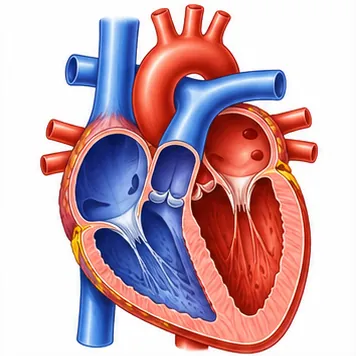
Original TestPrepKart practice illustration · Human Heart · Circulation
DIAGRAM Q01 · Human Heart · Circulation
Which vessel carries blood from the right ventricle toward the lungs?
A. Aorta
Incorrect. Answer: B. Pulmonary artery. The pulmonary artery carries deoxygenated blood from the right ventricle to the lungs.Watch out: The pulmonary vein carries oxygenated blood back to the left atrium.
B. Pulmonary artery
Correct. Answer: B. Pulmonary artery. The pulmonary artery carries deoxygenated blood from the right ventricle to the lungs.Watch out: The pulmonary vein carries oxygenated blood back to the left atrium.
C. Pulmonary veins
Incorrect. Answer: B. Pulmonary artery. The pulmonary artery carries deoxygenated blood from the right ventricle to the lungs.Watch out: The pulmonary vein carries oxygenated blood back to the left atrium.
D. Superior vena cava
Incorrect. Answer: B. Pulmonary artery. The pulmonary artery carries deoxygenated blood from the right ventricle to the lungs.Watch out: The pulmonary vein carries oxygenated blood back to the left atrium.
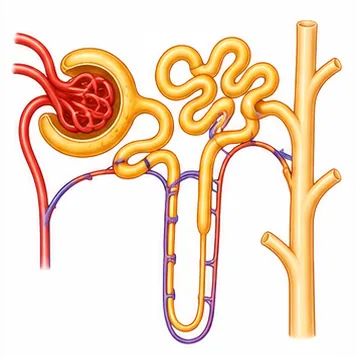
Original TestPrepKart practice illustration · Nephron · Excretion
DIAGRAM Q02 · Nephron · Excretion
At which structure does blood plasma undergo the first ultrafiltration step?
A. Collecting duct
Incorrect. Answer: C. Glomerulus within Bowman’s capsule. Filtration occurs across the glomerular barrier into Bowman’s space.Watch out: Most glucose reabsorption is later, predominantly in the proximal tubule.
B. Loop of Henle
Incorrect. Answer: C. Glomerulus within Bowman’s capsule. Filtration occurs across the glomerular barrier into Bowman’s space.Watch out: Most glucose reabsorption is later, predominantly in the proximal tubule.
C. Glomerulus within Bowman’s capsule
Correct. Answer: C. Glomerulus within Bowman’s capsule. Filtration occurs across the glomerular barrier into Bowman’s space.Watch out: Most glucose reabsorption is later, predominantly in the proximal tubule.
D. Distal convoluted tubule
Incorrect. Answer: C. Glomerulus within Bowman’s capsule. Filtration occurs across the glomerular barrier into Bowman’s space.Watch out: Most glucose reabsorption is later, predominantly in the proximal tubule.
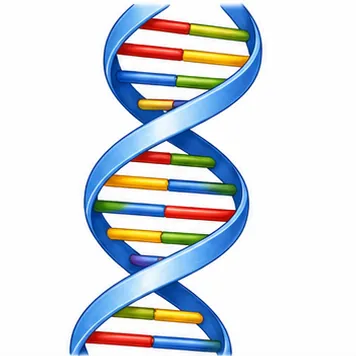
Original TestPrepKart practice illustration · DNA · Molecular Genetics
DIAGRAM Q03 · DNA · Molecular Genetics
In standard DNA base pairing, adenine pairs with which base?
A. Uracil
Incorrect. Answer: D. Thymine. Adenine forms two hydrogen bonds with thymine in double-stranded DNA.Watch out: Uracil normally replaces thymine in RNA.
B. Cytosine
Incorrect. Answer: D. Thymine. Adenine forms two hydrogen bonds with thymine in double-stranded DNA.Watch out: Uracil normally replaces thymine in RNA.
C. Guanine
Incorrect. Answer: D. Thymine. Adenine forms two hydrogen bonds with thymine in double-stranded DNA.Watch out: Uracil normally replaces thymine in RNA.
D. Thymine
Correct. Answer: D. Thymine. Adenine forms two hydrogen bonds with thymine in double-stranded DNA.Watch out: Uracil normally replaces thymine in RNA.
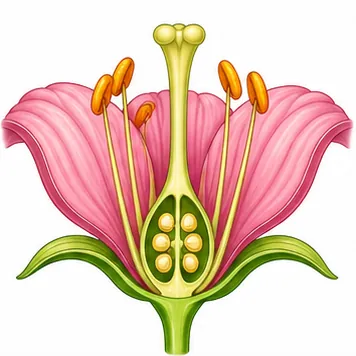
Original TestPrepKart practice illustration · Flower · Reproduction
DIAGRAM Q04 · Flower · Reproduction
Following fertilisation in an angiosperm, an ovule usually develops into the:
A. Seed
Correct. Answer: A. Seed. The fertilised ovule develops into the seed; the ovary generally forms the fruit.Watch out: Do not confuse the ovule with the whole ovary.
B. Fruit wall
Incorrect. Answer: A. Seed. The fertilised ovule develops into the seed; the ovary generally forms the fruit.Watch out: Do not confuse the ovule with the whole ovary.
C. Stigma
Incorrect. Answer: A. Seed. The fertilised ovule develops into the seed; the ovary generally forms the fruit.Watch out: Do not confuse the ovule with the whole ovary.
D. Anther
Incorrect. Answer: A. Seed. The fertilised ovule develops into the seed; the ovary generally forms the fruit.Watch out: Do not confuse the ovule with the whole ovary.
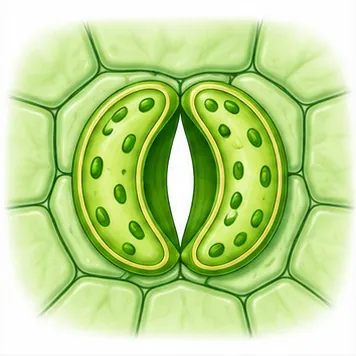
Original TestPrepKart practice illustration · Stomata · Plant Physiology
DIAGRAM Q05 · Stomata · Plant Physiology
When guard cells become turgid, the stomatal pore generally:
A. Permanently closes
Incorrect. Answer: B. Opens. Turgid guard cells curve apart because of wall structure and their differential expansion.Watch out: Opening and closing depend on turgor, not disappearance of guard cells.
B. Opens
Correct. Answer: B. Opens. Turgid guard cells curve apart because of wall structure and their differential expansion.Watch out: Opening and closing depend on turgor, not disappearance of guard cells.
C. Loses all chloroplasts
Incorrect. Answer: B. Opens. Turgid guard cells curve apart because of wall structure and their differential expansion.Watch out: Opening and closing depend on turgor, not disappearance of guard cells.
D. Stops gas exchange in every case
Incorrect. Answer: B. Opens. Turgid guard cells curve apart because of wall structure and their differential expansion.Watch out: Opening and closing depend on turgor, not disappearance of guard cells.
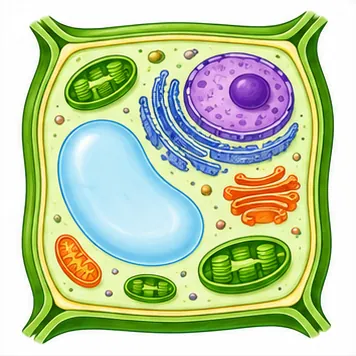
Original TestPrepKart practice illustration · Plant Cell · Cell Biology
DIAGRAM Q06 · Plant Cell · Cell Biology
Which organelle contains thylakoids and is directly involved in photosynthesis?
A. Golgi apparatus
Incorrect. Answer: C. Chloroplast. Chloroplasts possess thylakoid membranes where light reactions take place.Watch out: Mitochondria perform much of aerobic respiration.
B. Lysosome
Incorrect. Answer: C. Chloroplast. Chloroplasts possess thylakoid membranes where light reactions take place.Watch out: Mitochondria perform much of aerobic respiration.
C. Chloroplast
Correct. Answer: C. Chloroplast. Chloroplasts possess thylakoid membranes where light reactions take place.Watch out: Mitochondria perform much of aerobic respiration.
D. Nucleus
Incorrect. Answer: C. Chloroplast. Chloroplasts possess thylakoid membranes where light reactions take place.Watch out: Mitochondria perform much of aerobic respiration.
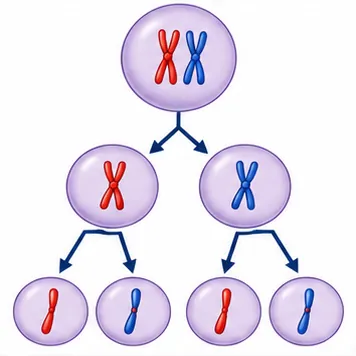
Original TestPrepKart practice illustration · Meiosis · Cell Division
DIAGRAM Q07 · Meiosis · Cell Division
The most direct significance of meiosis in sexual reproduction is to:
A. Halve chromosome number in resulting gametes
Correct. Answer: A. Halve chromosome number in resulting gametes. Meiosis reduces the chromosome number and contributes to genetic variation.Watch out: Crossing-over and independent assortment promote variation rather than identity.
B. Double chromosome number every generation
Incorrect. Answer: A. Halve chromosome number in resulting gametes. Meiosis reduces the chromosome number and contributes to genetic variation.Watch out: Crossing-over and independent assortment promote variation rather than identity.
C. Keep all resulting cells genetically identical
Incorrect. Answer: A. Halve chromosome number in resulting gametes. Meiosis reduces the chromosome number and contributes to genetic variation.Watch out: Crossing-over and independent assortment promote variation rather than identity.
D. Stop homologous recombination
Incorrect. Answer: A. Halve chromosome number in resulting gametes. Meiosis reduces the chromosome number and contributes to genetic variation.Watch out: Crossing-over and independent assortment promote variation rather than identity.
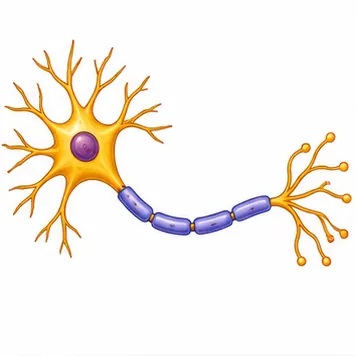
Original TestPrepKart practice illustration · Neuron · Neural Control
DIAGRAM Q08 · Neuron · Neural Control
The usual direction of impulse transmission along a typical neuron is:
A. Axon terminals to dendrites
Incorrect. Answer: B. Dendrites/cell body toward axon terminals. Inputs are received by dendrites/cell body; action potentials propagate along the axon toward its terminals.Watch out: Myelin insulates and speeds conduction but is not the origin of the impulse.
B. Dendrites/cell body toward axon terminals
Correct. Answer: B. Dendrites/cell body toward axon terminals. Inputs are received by dendrites/cell body; action potentials propagate along the axon toward its terminals.Watch out: Myelin insulates and speeds conduction but is not the origin of the impulse.
C. Nucleus to mitochondria and back
Incorrect. Answer: B. Dendrites/cell body toward axon terminals. Inputs are received by dendrites/cell body; action potentials propagate along the axon toward its terminals.Watch out: Myelin insulates and speeds conduction but is not the origin of the impulse.
D. Myelin to plasma membrane only
Incorrect. Answer: B. Dendrites/cell body toward axon terminals. Inputs are received by dendrites/cell body; action potentials propagate along the axon toward its terminals.Watch out: Myelin insulates and speeds conduction but is not the origin of the impulse.
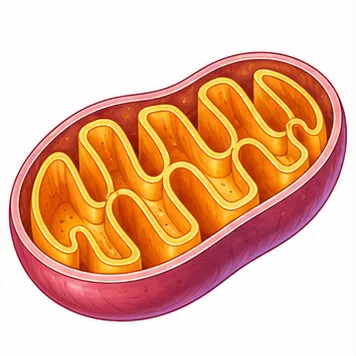
Original TestPrepKart practice illustration · Mitochondria · Cell Respiration
DIAGRAM Q09 · Mitochondria · Cell Respiration
The inner-membrane folds called cristae mainly increase area for:
A. DNA packaging
Incorrect. Answer: C. Oxidative phosphorylation machinery. Cristae increase surface area for electron transport complexes and ATP synthase.Watch out: Thylakoids, not cristae, support chloroplast light reactions.
B. Photosynthetic light reactions
Incorrect. Answer: C. Oxidative phosphorylation machinery. Cristae increase surface area for electron transport complexes and ATP synthase.Watch out: Thylakoids, not cristae, support chloroplast light reactions.
C. Oxidative phosphorylation machinery
Correct. Answer: C. Oxidative phosphorylation machinery. Cristae increase surface area for electron transport complexes and ATP synthase.Watch out: Thylakoids, not cristae, support chloroplast light reactions.
D. Cell wall synthesis
Incorrect. Answer: C. Oxidative phosphorylation machinery. Cristae increase surface area for electron transport complexes and ATP synthase.Watch out: Thylakoids, not cristae, support chloroplast light reactions.
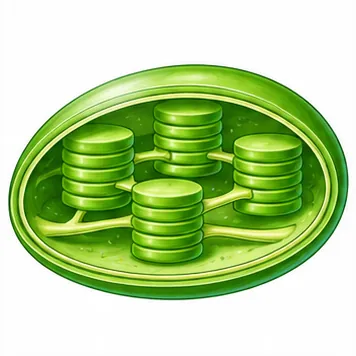
Original TestPrepKart practice illustration · Chloroplast · Photosynthesis
DIAGRAM Q10 · Chloroplast · Photosynthesis
Chlorophyll molecules involved in light capture are located mainly in the:
A. Chloroplast envelope only
Incorrect. Answer: D. Thylakoid membranes. Photosystems with chlorophyll are embedded in thylakoid membranes.Watch out: The Calvin cycle primarily runs in the stroma.
B. Stroma without any membrane
Incorrect. Answer: D. Thylakoid membranes. Photosystems with chlorophyll are embedded in thylakoid membranes.Watch out: The Calvin cycle primarily runs in the stroma.
C. Nucleolus
Incorrect. Answer: D. Thylakoid membranes. Photosystems with chlorophyll are embedded in thylakoid membranes.Watch out: The Calvin cycle primarily runs in the stroma.
D. Thylakoid membranes
Correct. Answer: D. Thylakoid membranes. Photosystems with chlorophyll are embedded in thylakoid membranes.Watch out: The Calvin cycle primarily runs in the stroma.
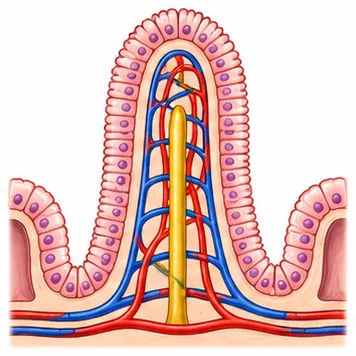
Original TestPrepKart practice illustration · Intestinal Villus · Absorption
DIAGRAM Q11 · Intestinal Villus · Absorption
The central lymphatic capillary (lacteal) in an intestinal villus mainly helps absorb:
A. Digested dietary lipids transported as chylomicrons
Correct. Answer: A. Digested dietary lipids transported as chylomicrons. Long-chain dietary fats are repackaged into chylomicrons, which enter intestinal lacteals.Watch out: Many sugars and amino acids enter blood capillaries rather than the lacteal.
B. Oxygen from inhaled air
Incorrect. Answer: A. Digested dietary lipids transported as chylomicrons. Long-chain dietary fats are repackaged into chylomicrons, which enter intestinal lacteals.Watch out: Many sugars and amino acids enter blood capillaries rather than the lacteal.
C. Whole intact food particles
Incorrect. Answer: A. Digested dietary lipids transported as chylomicrons. Long-chain dietary fats are repackaged into chylomicrons, which enter intestinal lacteals.Watch out: Many sugars and amino acids enter blood capillaries rather than the lacteal.
D. Red blood cells from the gut
Incorrect. Answer: A. Digested dietary lipids transported as chylomicrons. Long-chain dietary fats are repackaged into chylomicrons, which enter intestinal lacteals.Watch out: Many sugars and amino acids enter blood capillaries rather than the lacteal.
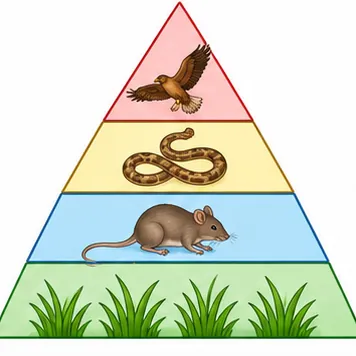
Original TestPrepKart practice illustration · Ecology · Energy Transfer
DIAGRAM Q12 · Ecology · Energy Transfer
What generally happens to usable energy at successive higher trophic levels?
A. It rises tenfold
Incorrect. Answer: B. It declines substantially. Energy transfer is inefficient; approximately one-tenth is commonly transferred to the next trophic level as a teaching rule of thumb.Watch out: The 10% value is approximate, not a fixed measurement for every ecosystem.
B. It declines substantially
Correct. Answer: B. It declines substantially. Energy transfer is inefficient; approximately one-tenth is commonly transferred to the next trophic level as a teaching rule of thumb.Watch out: The 10% value is approximate, not a fixed measurement for every ecosystem.
C. It stays constant
Incorrect. Answer: B. It declines substantially. Energy transfer is inefficient; approximately one-tenth is commonly transferred to the next trophic level as a teaching rule of thumb.Watch out: The 10% value is approximate, not a fixed measurement for every ecosystem.
D. It is fully recycled without loss
Incorrect. Answer: B. It declines substantially. Energy transfer is inefficient; approximately one-tenth is commonly transferred to the next trophic level as a teaching rule of thumb.Watch out: The 10% value is approximate, not a fixed measurement for every ecosystem.
15 NEET Biology Assertion–Reason Practice Questions
Use the standard assertion–reason choice key below. These are original NEET-style conceptual checks, not questions attributed to a particular NEET year.
A. Both assertion and reason are true, and the reason correctly explains the assertion
B. Both are true, but the reason does not correctly explain the assertion
C. Assertion is true but reason is false
D. Assertion is false but reason is true
ASSERTION–REASON 01 · Stomatal movement
Assertion: Stomata generally open when guard cells become turgid.
Reason: Water entry increases guard-cell turgor and changes their shape.
A. Both assertion and reason are true, and the reason correctly explains the assertion
Correct. Answer: A. Both assertion and reason are true, and the reason correctly explains the assertion. Both statements are true; turgor change explains pore opening.
B. Both are true, but the reason does not correctly explain the assertion
Incorrect. Answer: A. Both assertion and reason are true, and the reason correctly explains the assertion. Both statements are true; turgor change explains pore opening.
C. Assertion is true but reason is false
Incorrect. Answer: A. Both assertion and reason are true, and the reason correctly explains the assertion. Both statements are true; turgor change explains pore opening.
D. Assertion is false but reason is true
Incorrect. Answer: A. Both assertion and reason are true, and the reason correctly explains the assertion. Both statements are true; turgor change explains pore opening.
ASSERTION–REASON 02 · Plant transport
Assertion: Xylem is the main tissue for transport of sucrose from leaves to sinks.
Reason: Phloem transports photoassimilates between sources and sinks.
A. Both assertion and reason are true, and the reason correctly explains the assertion
Incorrect. Answer: D. Assertion is false but reason is true. Xylem mainly moves water/minerals; phloem transports sugars. Assertion false, reason true.
B. Both are true, but the reason does not correctly explain the assertion
Incorrect. Answer: D. Assertion is false but reason is true. Xylem mainly moves water/minerals; phloem transports sugars. Assertion false, reason true.
C. Assertion is true but reason is false
Incorrect. Answer: D. Assertion is false but reason is true. Xylem mainly moves water/minerals; phloem transports sugars. Assertion false, reason true.
D. Assertion is false but reason is true
Correct. Answer: D. Assertion is false but reason is true. Xylem mainly moves water/minerals; phloem transports sugars. Assertion false, reason true.
ASSERTION–REASON 03 · DNA replication
Assertion: DNA replication is described as semiconservative.
Reason: Each daughter DNA double helix usually contains one old and one newly synthesised strand.
A. Both assertion and reason are true, and the reason correctly explains the assertion
Correct. Answer: A. Both assertion and reason are true, and the reason correctly explains the assertion. The reason is the definition of semiconservative replication.
B. Both are true, but the reason does not correctly explain the assertion
Incorrect. Answer: A. Both assertion and reason are true, and the reason correctly explains the assertion. The reason is the definition of semiconservative replication.
C. Assertion is true but reason is false
Incorrect. Answer: A. Both assertion and reason are true, and the reason correctly explains the assertion. The reason is the definition of semiconservative replication.
D. Assertion is false but reason is true
Incorrect. Answer: A. Both assertion and reason are true, and the reason correctly explains the assertion. The reason is the definition of semiconservative replication.
ASSERTION–REASON 04 · Cell division
Assertion: Mitosis generally conserves chromosome number in daughter nuclei.
Reason: Homologous chromosomes routinely pair and cross over during mitotic prophase.
A. Both assertion and reason are true, and the reason correctly explains the assertion
Incorrect. Answer: C. Assertion is true but reason is false. Mitosis conserves number, but homologous pairing and crossing over characterise meiosis I.
B. Both are true, but the reason does not correctly explain the assertion
Incorrect. Answer: C. Assertion is true but reason is false. Mitosis conserves number, but homologous pairing and crossing over characterise meiosis I.
C. Assertion is true but reason is false
Correct. Answer: C. Assertion is true but reason is false. Mitosis conserves number, but homologous pairing and crossing over characterise meiosis I.
D. Assertion is false but reason is true
Incorrect. Answer: C. Assertion is true but reason is false. Mitosis conserves number, but homologous pairing and crossing over characterise meiosis I.
ASSERTION–REASON 05 · Cardiac conduction
Assertion: The sinoatrial node normally initiates the heartbeat.
Reason: It has an intrinsic pacemaker rate higher than other cardiac conduction tissues.
A. Both assertion and reason are true, and the reason correctly explains the assertion
Correct. Answer: A. Both assertion and reason are true, and the reason correctly explains the assertion. SA nodal automaticity underlies normal sinus rhythm.
B. Both are true, but the reason does not correctly explain the assertion
Incorrect. Answer: A. Both assertion and reason are true, and the reason correctly explains the assertion. SA nodal automaticity underlies normal sinus rhythm.
C. Assertion is true but reason is false
Incorrect. Answer: A. Both assertion and reason are true, and the reason correctly explains the assertion. SA nodal automaticity underlies normal sinus rhythm.
D. Assertion is false but reason is true
Incorrect. Answer: A. Both assertion and reason are true, and the reason correctly explains the assertion. SA nodal automaticity underlies normal sinus rhythm.
ASSERTION–REASON 06 · Human red blood cells
Assertion: A mature human erythrocyte synthesises new haemoglobin using ribosomes.
Reason: Mature human erythrocytes have lost nuclei and ribosomes.
A. Both assertion and reason are true, and the reason correctly explains the assertion
Incorrect. Answer: D. Assertion is false but reason is true. Assertion is false; without ribosomes a mature erythrocyte cannot synthesise new proteins.
B. Both are true, but the reason does not correctly explain the assertion
Incorrect. Answer: D. Assertion is false but reason is true. Assertion is false; without ribosomes a mature erythrocyte cannot synthesise new proteins.
C. Assertion is true but reason is false
Incorrect. Answer: D. Assertion is false but reason is true. Assertion is false; without ribosomes a mature erythrocyte cannot synthesise new proteins.
D. Assertion is false but reason is true
Correct. Answer: D. Assertion is false but reason is true. Assertion is false; without ribosomes a mature erythrocyte cannot synthesise new proteins.
ASSERTION–REASON 07 · Immunity
Assertion: Plasma cells secrete antibodies.
Reason: Plasma cells are differentiated activated B lymphocytes.
A. Both assertion and reason are true, and the reason correctly explains the assertion
Correct. Answer: A. Both assertion and reason are true, and the reason correctly explains the assertion. B-cell differentiation produces antibody-secreting plasma cells.
B. Both are true, but the reason does not correctly explain the assertion
Incorrect. Answer: A. Both assertion and reason are true, and the reason correctly explains the assertion. B-cell differentiation produces antibody-secreting plasma cells.
C. Assertion is true but reason is false
Incorrect. Answer: A. Both assertion and reason are true, and the reason correctly explains the assertion. B-cell differentiation produces antibody-secreting plasma cells.
D. Assertion is false but reason is true
Incorrect. Answer: A. Both assertion and reason are true, and the reason correctly explains the assertion. B-cell differentiation produces antibody-secreting plasma cells.
ASSERTION–REASON 08 · Respiration
Assertion: Much aerobic ATP synthesis in eukaryotes occurs by oxidative phosphorylation.
Reason: The electron transport chain helps build a proton gradient across the inner mitochondrial membrane.
A. Both assertion and reason are true, and the reason correctly explains the assertion
Correct. Answer: A. Both assertion and reason are true, and the reason correctly explains the assertion. The gradient provides energy for ATP synthase to make ATP.
B. Both are true, but the reason does not correctly explain the assertion
Incorrect. Answer: A. Both assertion and reason are true, and the reason correctly explains the assertion. The gradient provides energy for ATP synthase to make ATP.
C. Assertion is true but reason is false
Incorrect. Answer: A. Both assertion and reason are true, and the reason correctly explains the assertion. The gradient provides energy for ATP synthase to make ATP.
D. Assertion is false but reason is true
Incorrect. Answer: A. Both assertion and reason are true, and the reason correctly explains the assertion. The gradient provides energy for ATP synthase to make ATP.
ASSERTION–REASON 09 · Enzymes
Assertion: Enzymes speed reactions partly by lowering activation energy.
Reason: Enzymes change the equilibrium constant of the catalysed reaction.
A. Both assertion and reason are true, and the reason correctly explains the assertion
Incorrect. Answer: C. Assertion is true but reason is false. Enzymes alter kinetics, not the position of equilibrium.
B. Both are true, but the reason does not correctly explain the assertion
Incorrect. Answer: C. Assertion is true but reason is false. Enzymes alter kinetics, not the position of equilibrium.
C. Assertion is true but reason is false
Correct. Answer: C. Assertion is true but reason is false. Enzymes alter kinetics, not the position of equilibrium.
D. Assertion is false but reason is true
Incorrect. Answer: C. Assertion is true but reason is false. Enzymes alter kinetics, not the position of equilibrium.
ASSERTION–REASON 10 · Genetics
Assertion: The recessive phenotype frequency in Aa × Aa is 1/4 with complete dominance.
Reason: Segregation yields genotypes AA:Aa:aa in a 1:2:1 ratio.
A. Both assertion and reason are true, and the reason correctly explains the assertion
Correct. Answer: A. Both assertion and reason are true, and the reason correctly explains the assertion. One quarter of offspring are aa and show the recessive phenotype.
B. Both are true, but the reason does not correctly explain the assertion
Incorrect. Answer: A. Both assertion and reason are true, and the reason correctly explains the assertion. One quarter of offspring are aa and show the recessive phenotype.
C. Assertion is true but reason is false
Incorrect. Answer: A. Both assertion and reason are true, and the reason correctly explains the assertion. One quarter of offspring are aa and show the recessive phenotype.
D. Assertion is false but reason is true
Incorrect. Answer: A. Both assertion and reason are true, and the reason correctly explains the assertion. One quarter of offspring are aa and show the recessive phenotype.
ASSERTION–REASON 11 · Aquatic ecosystems
Assertion: Eutrophication can lower dissolved oxygen.
Reason: Microbial decomposition of excess organic matter consumes dissolved oxygen.
A. Both assertion and reason are true, and the reason correctly explains the assertion
Correct. Answer: A. Both assertion and reason are true, and the reason correctly explains the assertion. Decomposition after nutrient enrichment can cause hypoxia.
B. Both are true, but the reason does not correctly explain the assertion
Incorrect. Answer: A. Both assertion and reason are true, and the reason correctly explains the assertion. Decomposition after nutrient enrichment can cause hypoxia.
C. Assertion is true but reason is false
Incorrect. Answer: A. Both assertion and reason are true, and the reason correctly explains the assertion. Decomposition after nutrient enrichment can cause hypoxia.
D. Assertion is false but reason is true
Incorrect. Answer: A. Both assertion and reason are true, and the reason correctly explains the assertion. Decomposition after nutrient enrichment can cause hypoxia.
Reason: One sperm unites with the egg and the second participates in endosperm formation.
A. Both assertion and reason are true, and the reason correctly explains the assertion
Correct. Answer: A. Both assertion and reason are true, and the reason correctly explains the assertion. Syngamy and triple fusion together form double fertilisation.
B. Both are true, but the reason does not correctly explain the assertion
Incorrect. Answer: A. Both assertion and reason are true, and the reason correctly explains the assertion. Syngamy and triple fusion together form double fertilisation.
C. Assertion is true but reason is false
Incorrect. Answer: A. Both assertion and reason are true, and the reason correctly explains the assertion. Syngamy and triple fusion together form double fertilisation.
D. Assertion is false but reason is true
Incorrect. Answer: A. Both assertion and reason are true, and the reason correctly explains the assertion. Syngamy and triple fusion together form double fertilisation.
ASSERTION–REASON 13 · Genetic code
Assertion: UAA acts as a stop codon during translation.
Reason: UAA ordinarily specifies methionine in the standard genetic code.
A. Both assertion and reason are true, and the reason correctly explains the assertion
Incorrect. Answer: C. Assertion is true but reason is false. UAA is a termination codon, whereas AUG usually codes methionine/start.
B. Both are true, but the reason does not correctly explain the assertion
Incorrect. Answer: C. Assertion is true but reason is false. UAA is a termination codon, whereas AUG usually codes methionine/start.
C. Assertion is true but reason is false
Correct. Answer: C. Assertion is true but reason is false. UAA is a termination codon, whereas AUG usually codes methionine/start.
D. Assertion is false but reason is true
Incorrect. Answer: C. Assertion is true but reason is false. UAA is a termination codon, whereas AUG usually codes methionine/start.
ASSERTION–REASON 14 · Respiratory control
Assertion: Elevated arterial CO₂ can stimulate breathing.
Reason: Changes in CO₂ and associated pH are sensed by chemoreceptor systems.
A. Both assertion and reason are true, and the reason correctly explains the assertion
Correct. Answer: A. Both assertion and reason are true, and the reason correctly explains the assertion. Chemoreceptor signalling helps regulate ventilation with arterial CO₂.
B. Both are true, but the reason does not correctly explain the assertion
Incorrect. Answer: A. Both assertion and reason are true, and the reason correctly explains the assertion. Chemoreceptor signalling helps regulate ventilation with arterial CO₂.
C. Assertion is true but reason is false
Incorrect. Answer: A. Both assertion and reason are true, and the reason correctly explains the assertion. Chemoreceptor signalling helps regulate ventilation with arterial CO₂.
D. Assertion is false but reason is true
Incorrect. Answer: A. Both assertion and reason are true, and the reason correctly explains the assertion. Chemoreceptor signalling helps regulate ventilation with arterial CO₂.
ASSERTION–REASON 15 · Maternal immunity
Assertion: IgG antibodies can be transferred from mother to fetus through the placenta.
Reason: All antibody classes cross the placenta equally well.
A. Both assertion and reason are true, and the reason correctly explains the assertion
Incorrect. Answer: C. Assertion is true but reason is false. IgG is the main immunoglobulin class actively transported across the placenta.
B. Both are true, but the reason does not correctly explain the assertion
Incorrect. Answer: C. Assertion is true but reason is false. IgG is the main immunoglobulin class actively transported across the placenta.
C. Assertion is true but reason is false
Correct. Answer: C. Assertion is true but reason is false. IgG is the main immunoglobulin class actively transported across the placenta.
D. Assertion is false but reason is true
Incorrect. Answer: C. Assertion is true but reason is false. IgG is the main immunoglobulin class actively transported across the placenta.
20 NCERT-Aligned Biology Concept Checks
This set checks concepts found in NEET-relevant NCERT Biology chapters, but the statements are newly written study prompts, not copied textbook lines. Select True or False to reveal an explanation.
NCERT CONCEPT CHECK 01
Ribosomes are present in both prokaryotic and eukaryotic cells.
A. True
Correct. Answer: A. True. Both cell types use ribosomes to synthesise polypeptides.
B. False
Incorrect. Answer: A. True. Both cell types use ribosomes to synthesise polypeptides.
NCERT CONCEPT CHECK 02
Mature human red blood cells contain mitochondria.
A. True
Incorrect. Answer: B. False. Mature human erythrocytes have no mitochondria.
B. False
Correct. Answer: B. False. Mature human erythrocytes have no mitochondria.
NCERT CONCEPT CHECK 03
The fluid mosaic model recognises a dynamic lipid bilayer with associated proteins.
A. True
Correct. Answer: A. True. Membrane lipids and many proteins have lateral mobility.
B. False
Incorrect. Answer: A. True. Membrane lipids and many proteins have lateral mobility.
NCERT CONCEPT CHECK 04
DNA synthesis in a typical cell cycle occurs during the G2 phase.
A. True
Incorrect. Answer: B. False. Chromosomal DNA replication occurs in S phase.
B. False
Correct. Answer: B. False. Chromosomal DNA replication occurs in S phase.
NCERT CONCEPT CHECK 05
Meiosis produces a reduction in chromosome number.
A. True
Correct. Answer: A. True. Homologous chromosomes segregate in the first meiotic division.
B. False
Incorrect. Answer: A. True. Homologous chromosomes segregate in the first meiotic division.
NCERT CONCEPT CHECK 06
Chloroplasts contain thylakoid membranes.
A. True
Correct. Answer: A. True. Photosynthetic light-reaction proteins are embedded in these membranes.
B. False
Incorrect. Answer: A. True. Photosynthetic light-reaction proteins are embedded in these membranes.
NCERT CONCEPT CHECK 07
The oxygen released in photosynthesis comes directly from carbon dioxide.
A. True
Incorrect. Answer: B. False. Water oxidation supplies released oxygen.
B. False
Correct. Answer: B. False. Water oxidation supplies released oxygen.
NCERT CONCEPT CHECK 08
Xylem principally transports sucrose from leaves to roots.
A. True
Incorrect. Answer: B. False. Phloem transports many organic nutrients; xylem primarily moves water and mineral ions.
B. False
Correct. Answer: B. False. Phloem transports many organic nutrients; xylem primarily moves water and mineral ions.
NCERT CONCEPT CHECK 09
The SA node acts as the normal pacemaker of the human heart.
A. True
Correct. Answer: A. True. It initiates impulses at the normal highest spontaneous rate.
B. False
Incorrect. Answer: A. True. It initiates impulses at the normal highest spontaneous rate.
NCERT CONCEPT CHECK 10
The nephron’s glomerulus filters blood plasma.
A. True
Correct. Answer: A. True. The filtration barrier passes water and small solutes into Bowman’s space.
B. False
Incorrect. Answer: A. True. The filtration barrier passes water and small solutes into Bowman’s space.
NCERT CONCEPT CHECK 11
Human fertilisation most often takes place in the ampullary-isthmic region of the oviduct.
A. True
Correct. Answer: A. True. The ampullary-isthmic junction is a typical site of fertilisation.
B. False
Incorrect. Answer: A. True. The ampullary-isthmic junction is a typical site of fertilisation.
NCERT CONCEPT CHECK 12
The placenta can transfer maternal IgG to the fetus.
A. True
Correct. Answer: A. True. IgG transport confers passive immunity before birth.
B. False
Incorrect. Answer: A. True. IgG transport confers passive immunity before birth.
NCERT CONCEPT CHECK 13
An AB blood-group individual has both IA and IB alleles.
A. True
Correct. Answer: A. True. Codominance gives expression of A and B antigens.
B. False
Incorrect. Answer: A. True. Codominance gives expression of A and B antigens.
NCERT CONCEPT CHECK 14
AUG typically functions as a start codon in translation.
A. True
Correct. Answer: A. True. AUG encodes methionine in the standard code and commonly initiates translation.
B. False
Incorrect. Answer: A. True. AUG encodes methionine in the standard code and commonly initiates translation.
NCERT CONCEPT CHECK 15
Taq polymerase is used in PCR because it survives repeated high-temperature cycles.
A. True
Correct. Answer: A. True. A thermostable polymerase tolerates repeated denaturation steps.
B. False
Incorrect. Answer: A. True. A thermostable polymerase tolerates repeated denaturation steps.
NCERT CONCEPT CHECK 16
An ovary usually develops into a seed after fertilisation.
A. True
Incorrect. Answer: B. False. The ovule generally becomes the seed, while the ovary develops into the fruit.
B. False
Correct. Answer: B. False. The ovule generally becomes the seed, while the ovary develops into the fruit.
NCERT CONCEPT CHECK 17
Most enzymes speed a reaction by lowering the activation-energy barrier.
A. True
Correct. Answer: A. True. Catalysts make an alternative route with lower activation energy available.
B. False
Incorrect. Answer: A. True. Catalysts make an alternative route with lower activation energy available.
NCERT CONCEPT CHECK 18
Every ecological energy transfer is exactly 10% efficient.
A. True
Incorrect. Answer: B. False. Ten percent is a rough teaching approximation and varies among systems.
B. False
Correct. Answer: B. False. Ten percent is a rough teaching approximation and varies among systems.
NCERT CONCEPT CHECK 19
Antibiotics kill all viruses by blocking viral cell-wall synthesis.
A. True
Incorrect. Answer: B. False. Viruses do not have bacterial cell walls, and antibiotics do not routinely treat viral infections.
B. False
Correct. Answer: B. False. Viruses do not have bacterial cell walls, and antibiotics do not routinely treat viral infections.
NCERT CONCEPT CHECK 20
Guard cells help regulate stomatal pore opening.
A. True
Correct. Answer: A. True. Changes in turgor alter stomatal aperture.
B. False
Incorrect. Answer: A. True. Changes in turgor alter stomatal aperture.
NEET Biology PYQ Year and Chapter Verification Guide
Use this worksheet to classify questions after checking the original paper and answer key. Because not every past paper uses the same question format and syllabus, do not treat an unverified year label as an authentic PYQ attribution.
Paper year
Before attributing a PYQ
Resource
NEET 2026
Use the matching year and paper code from the library
For chapter frequency, record the number of correctly verified questions from each year rather than publishing unverified predicted weightage. You can compare your weak areas with TestPrepKart chapter-wise topics guide.
NEET Biology Previous-Year Questions PDF – PYQs and Answer Keys
NEET previous-year papers are not the same as original practice MCQs. Use a past paper to learn how Biology is tested in a full examination context; identify the paper year and code, then check the matching key. The TestPrepKart library currently lists paper resources through 2025, and its live contents can change.
When reviewing a paper, tag every Biology mistake as NCERT fact, process sequence, terminology, diagram, genetics calculation, or careless reading. Revision becomes more useful when you know the reason for an error.
How to Improve Accuracy With NEET Biology Question PDFs
The most useful Biology review is not a pile of unchecked MCQs. Use a brief error log after every practice set and revisit each wrong question after two or three days.
Weak area
Typical mistake
Better review action
Classification
Two similar groups remembered together
Write three distinguishing traits and two examples
Genetics
Phenotype and genotype ratios confused
List gametes and make the Punnett square
Human physiology
Hormone and organ functions switched
Draw a labelled pathway from stimulus to response
Plant physiology
C3 and C4 steps mixed up
Compare initial fixation, cell location and products
Molecular biology
5-prime and 3-prime directions reversed
Write strand directions above the diagram
Ecology
Energy transfer mistaken for recycling
Sketch a trophic pyramid, then explain energy loss
Three High-Value Biology Process Maps
Protein synthesis
DNA → transcription → mRNA → translation at ribosome → polypeptide
Practice the structure labelling of flower and embryo sac, a typical cell, human heart, nephron, neuron, DNA replication and ecological pyramid. You should refer to the diagrams in the present textbook for checking your labelling. Below is just a textual representation of these diagrams for reference purpose only.
45-Minute NEET Biology Practice Test and Performance Review
The companion practice-test file has a 45-question, 45-minute test with choice review, per-section scoring and a chapter-wise weak-area report. It is delivered as a separate standalone HTML tool for deployment in the TestPrepKart self-study portal; it is not presented as a functioning widget inside CKEditor.
Number of questions for that chapter in this practice set
Avoid judging a chapter from only 1–2 items
Incorrect answers
Concept, confusion, or recall errors
Write one correction note and reattempt later
Which NEET Biology PDFs Should You Use for 2027?
This Chapter Map above is a study guide that is designed according to the official NEET UG 2026 syllabus, which is the latest official syllabus at the time of creation of this page. However, before preparing for NEET 2027, it is advisable to match your PDFs and Chapter Checklist with the respective NTA/NMC 2027 bulletin when it becomes available. The historical chapter frequencies are not the allocations for 2027.
NEET Prep App for Students Preparing Outside India
Bring your Biology revision into a weekly plan
Students studying outside India can utilize the information available through TestPrepKart's NEET NRI Prep App for syllabus planning, study progress tracking, and NEET admissions. Ensure that Physics and Chemistry practice is done on the same schedule.
This is a suggested 30-day practice schedule, not an official timetable. Adjust daily targets around school workload and the time needed to learn chapters. Every third day, spend extra time correcting mistakes instead of starting an unrelated PDF.
Days
Study focus
Suggested practice
1–3
Diversity and structural organisation
45–60 chapter MCQs; review classification and diagrams
4–6
Cell structure, biomolecules and cell division
45–60 MCQs; compare organelles and phases
7–9
Plant physiology
45–60 MCQs; map C3/C4, respiration and growth regulators
10–12
Human physiology
45–60 MCQs; review heart, nephron, reflex and endocrine control
13–15
Reproduction
45–60 MCQs; revise flower and human reproduction diagrams
16–18
Genetics and molecular biology
45–60 MCQs; work crosses and central-dogma questions
19–21
Evolution, health and microbes
45–60 MCQs; practise terms, pathogens and applications
22–24
Biotechnology and ecology
45–60 MCQs; connect enzymes, PCR and trophic levels
25–27
Mixed Botany and Zoology
One or two timed mixed Biology sets; inspect error log
28–30
Previous-year review and final consolidation
Solve a past paper Biology portion; reattempt all missed MCQs
For USA-based students balancing high school and NEET, a practical weekday routine is 25–40 minutes of NCERT review followed by 20–30 minutes of MCQs, with a longer mixed set on the weekend. Keep track of topics covered, not only the number of files downloaded.
NEET Biology Preparation for NRI Students Abroad
If you are doing Grade 11th or Grade 12th in the USA or any other country, then cross-check the subject combination you have opted for in your school science stream with the latest NEET eligibility criteria. Practice with biology questions will help you in getting prepared for the examination.
Frequently Asked Questions About NEET Biology Question PDFs
Where can I download NEET Biology questions PDF?
Open the TestPrepKart Study Material library and choose Biology MCQs or the listed 100 Important Biology Questions With Solutions file. Some resources may require a download form.
Are all Class 11 and Class 12 Biology chapters available as individual PDFs?
Not necessarily. The chapter tables on this page guide syllabus coverage; individually hosted chapter PDFs should only be claimed after their download URLs are verified.
How many Biology questions were in NEET UG 2026?
The 2026 information bulletin specified 90 Biology multiple-choice questions worth a maximum of 360 marks. Check the 2027 bulletin once published.
Is this page suitable for NEET 2027 preparation?
Yes, as a practice resource based on the latest verified 2026 syllabus at editorial review. Update your chapter checklist if NTA or NMC announces 2027 changes.
Are the 36 sample questions original or actual PYQs?
They are original NEET-style practice questions with worked explanations. The separate past-paper library contains previous-year examination papers.
What is the difference between Biology MCQs and PYQs?
MCQs are practice questions that may be newly written; PYQs were asked in actual previous-year papers. Check the source year and paper code for an authentic PYQ.
Should I practise Botany or Zoology first?
Begin with your weaker syllabus areas and rotate between Botany and Zoology every few sessions. Neither is dispensable for the full Biology section.
How can I improve accuracy in statement-based Biology MCQs?
Read each statement independently, identify the precise incorrect word, and check the underlying concept before choosing an option.
Do Biology PDFs include answer explanations?
The original 36-question set on this page contains explanations. The TestPrepKart library lists a 100 Important Questions With Solutions resource; inspect each file description for answer-key coverage.
Can NRI students preparing in the USA use these resources?
Yes. Overseas students can use the same subject practice resources, while separately checking the current NEET exam, academic and counselling eligibility rules.
Is NCERT revision still useful alongside question banks?
Yes. Reading concepts and diagrams, attempting MCQs, and reviewing explanations are complementary steps rather than substitutes.
What should I do after finishing a Biology question PDF?
Mark wrong and guessed answers, write a short error note, revise the relevant concept, and reattempt those questions after two or three days.
Ready to Build a Stronger NEET Biology Routine?
Start with the Biology MCQ download library, practise the sample set, and use the wrong-answer log to guide revision. For families preparing outside India, TestPrepKart offers NEET preparation and admission planning support.