Free admissions Math demo
Timed SSAT- or ISEE-style quantitative items. You leave with a written plan matched to your school list.
Book the free demo →TestPrepKart Math Prep · Private school admissions · Grades 5-10
Two admission tests, different Math shapes, different guessing rules. This page is the counselor manual: SSAT vs ISEE Math, which one your schools want, how scoring works, and how we prep without mixing strategies.

Official portals already own registration, fees, and score reports. Our job is different: strengthen Grades 5-10 Math for the test your schools actually require, and coach the correct guessing rule (SSAT penalty vs ISEE no-penalty).
Timed SSAT- or ISEE-style quantitative items. You leave with a written plan matched to your school list.
Book the free demo →English lessons with Indian faculty on US pacing. USD rates sit on each grade hub.
See a 1:1 course example →Weekly peer energy when you want structure without a private-school panic packet alone.
See group details →Short packs when algebra, ratios, or geometry block admission Math sections.
Browse topic packs →We drill penalty-aware skipping for SSAT and attempt-more habits for ISEE.
Compare the two tests →Bring the schools. We help map which Math test to prioritize first.
See how to choose →Real screenshots from live TestprepKart math classes. Students and faculty on the call, with the lesson board open.
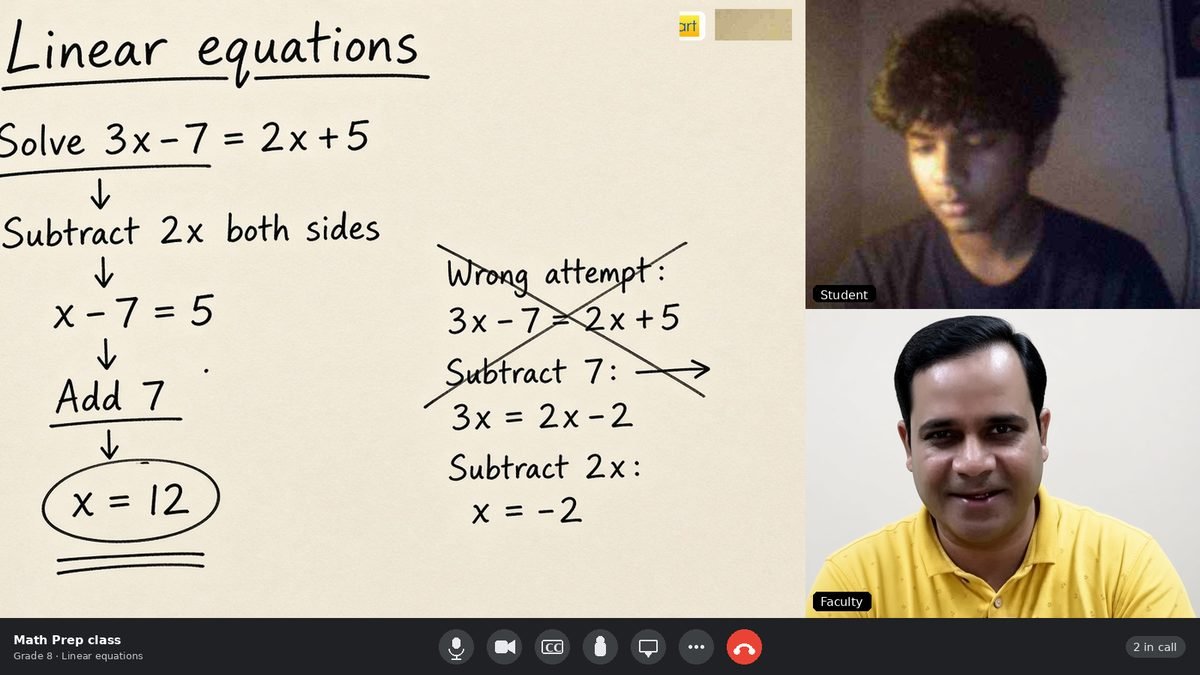


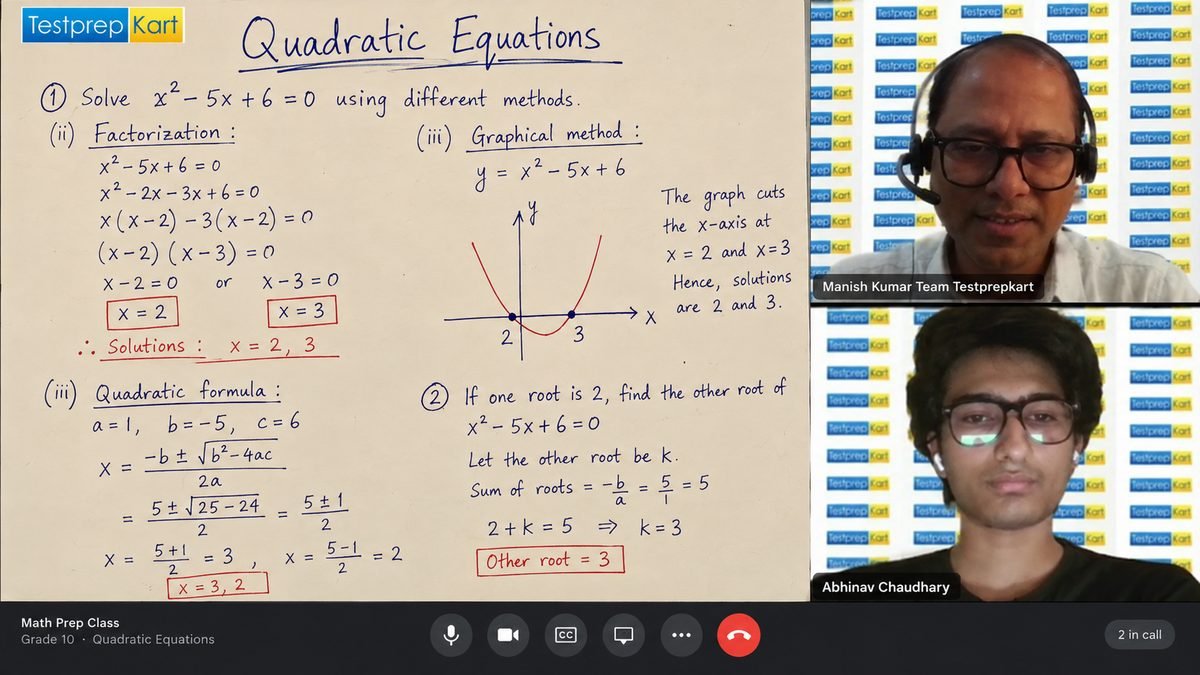

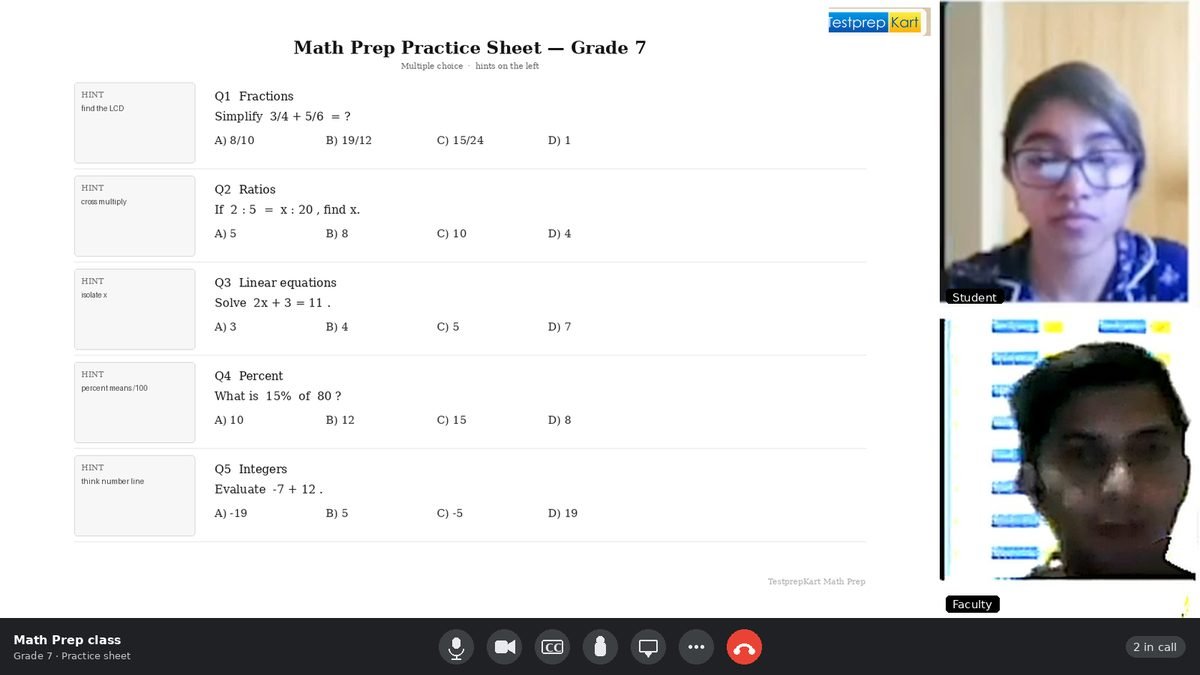
See how live Math Prep sessions run. These three clips are the same on every exam and grade page.
| Tests | SSAT (Secondary School Admission Test) and ISEE (Independent School Entrance Exam) |
|---|---|
| What this page covers | Math / Quantitative sections parents ask us to prep (full tests also include verbal, reading, writing) |
| Who | Students applying to many private/independent schools; levels depend on current grade and grade applying to |
| Registration | Parent/guardian through official SSAT or ISEE portals |
| Key Math difference | SSAT: two Quantitative sections + wrong-answer penalty. ISEE: QR + Math Achievement + no wrong-answer penalty. |
| Our coaching band | Grades 5-10 US families, including NRI and Indian-origin students |
A strong Math section helps. It does not replace recommendations, transcripts, or fit. We still coach Math like it matters, because for many selective schools it does.
| Eligibility | Students applying to schools that require or accept SSAT and/or ISEE. Level depends on current grade and grade applying to. |
|---|---|
| How to register | Parent/guardian account on the official SSAT portal or ISEE registration flow. Confirm paper/online/Flex options for your date. |
| Fees | Parent-paid official registration fees (ISEE family pages have published registration amounts by product; SSAT fees publish in the candidate handbook/portal). Tutoring is separate USD pricing on our hubs. |
| Our coaching band | Grades 5-10 Math sections, Indian faculty teaching in English, strategy matched to the chosen test. |
List schools. Write every campus and whether they require SSAT, ISEE, or either.
Pick a primary. If all accept one test, prepare that one. If split, prioritize the most selective / earliest deadline first.
Match the level. Use official level charts for current grade and grade applying to.
Register early enough. Online ISEE registration often needs lead time; SSAT dates fill. Confirm live portal rules.
Middle/Upper: two Math sections, 30 minutes each. Content is quantitative problem solving across the test day.
Quantitative Reasoning + Mathematics Achievement as separate timed sections (counts/times by level).
Because wrong answers subtract 1/4 point, random guessing on five-choice items can hurt. Teach mark-and-skip when an item is truly cold.
No wrong-answer penalty. Educated attempts usually beat blanks. Still manage time so easy points are not abandoned.
| Official SSAT / ISEE covers | What TestPrepKart adds |
|---|---|
| Accounts, fees, test dates, score reporting, school score sends. | Grades 5-10 Math tutoring timed to your application calendar. |
| Section timing and scoring rules in candidate handbooks / family guides. | Penalty-correct strategy drills and content gap plans on the grade hubs. |
| Which schools receive scores. | Help choosing a primary test from your school list before you overbuy prep. |
Start at ssat.org and ERB ISEE family pages. Then book our demo for a human Math plan.
Early private-school applications. Confirm whether target schools want SSAT, ISEE, or either.
SSAT Middle / ISEE Lower-Middle path · confirm school list
Ratios and multi-step stories start to matter. Wrong-answer strategy differs by test.
SSAT Middle · ISEE Middle (typical)
Level choice depends on current grade and grade applying to. Confirm before registering.
SSAT Middle / Upper border · ISEE Middle/Upper border
High-school private applications. Algebra fluency plus careful guessing rules.
SSAT Upper · ISEE Upper path for many high-school applications
Some families sit these for later entry or boarding. Algebra I strength helps both.
SSAT Upper · ISEE Upper · transfer / boarding applications
Less common, but transfer applicants still appear. Geometry + Algebra stamina both matter.
SSAT Upper / ISEE Upper · later transfer cases
SSAT, ISEE, or either. Pick a primary.
Official chart for current grade and grade applying to.
Grade hub fluency and algebra/geometry as needed.
SSAT dual Quant or ISEE QR + Achievement, with the right guessing rule.
Shorter review, sleep, and score-send planning notes.

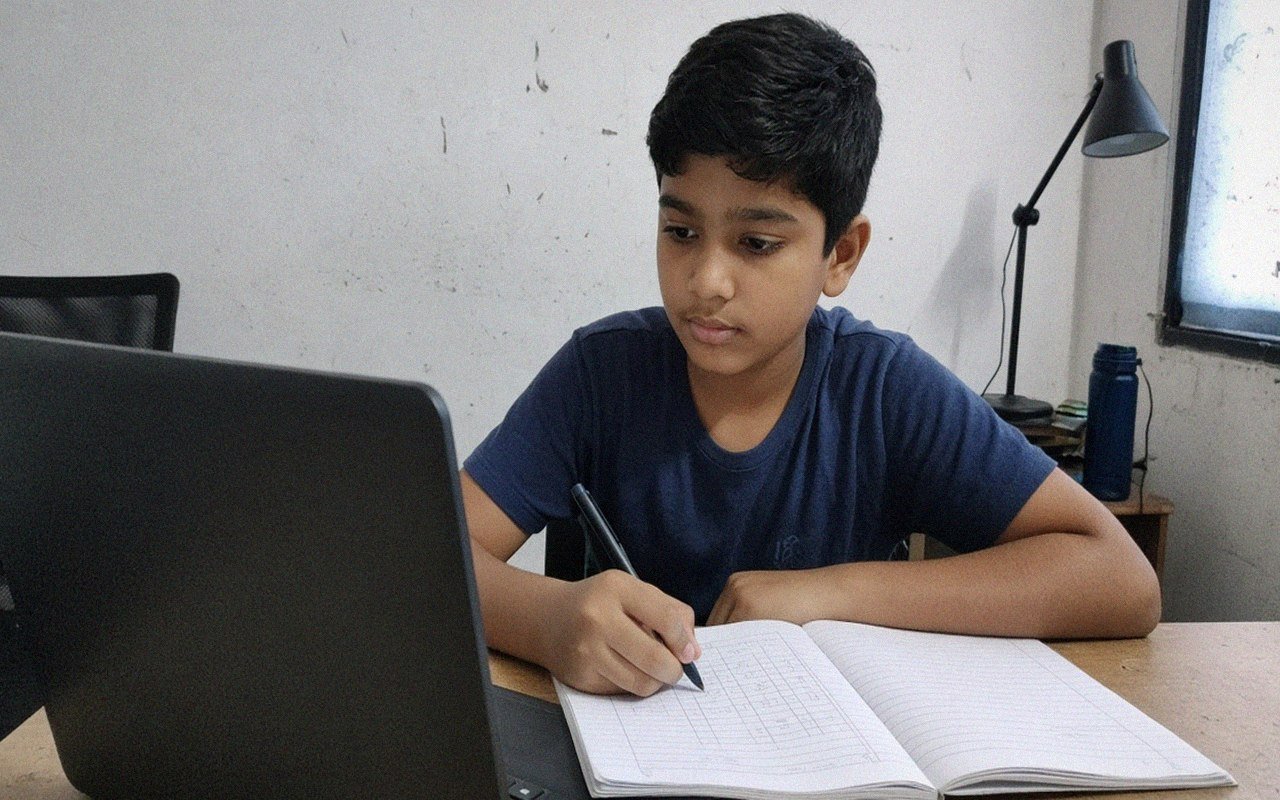
A useful prep story is which test the schools want, which Math gaps are real, and which guessing rule will not sabotage an otherwise solid section.
Many of our Grades 5-10 families are Indian-origin or NRI navigating SSAT/ISEE for the first time. Indian faculty teach Math in English, explain penalty rules clearly, and keep grade-level Math Prep aligned to application deadlines.
A live 1:1 Math session. Your child works timed quantitative items. You leave with a written admissions Math plan.
The Secondary School Admission Test (SSAT) and the Independent School Entrance Exam (ISEE) are private/independent school admission tests. Schools choose which they accept. Math is only one part of each exam.
Ask each target school. Some accept only one; some accept either. Do not buy both prep stacks until the school list is clear.
On Middle and Upper Level SSAT, students sit two Quantitative (Math) sections of 30 minutes each, plus other verbal/reading/writing sections. Elementary Level has its own shorter format.
ISEE includes Quantitative Reasoning and Mathematics Achievement as separate timed sections (exact counts/times vary by level). QR emphasizes reasoning; Achievement leans more on school-style math.
SSAT: yes for Middle/Upper multiple choice. Correct = +1, wrong = -1/4, blank = 0. Random guessing can hurt. ISEE: no wrong-answer penalty. Leaving blanks is usually worse than an educated attempt.
Through the official portals (SSAT parent account at portal.ssat.org; ISEE via ERB/enrollment pathways published for families). Fees and test formats (paper/online/Flex) publish each year. Confirm live pricing on the official sites.
SSAT reports scaled section scores and percentiles. ISEE reports scaled section scores, percentiles, and stanines (1-9); many ISEE schools discuss stanines heavily. Both compare students within a selective applicant pool, not the full national school population.
No. Applicant pools are competitive and change. We can build Math content, timing, and the correct guessing rule for the chosen test.
ssat.org / portal.ssat.org for SSAT. ERB ISEE family pages for ISEE. We link the ideas here; we do not host those portals.
Both are private-school admission tests, but Math section design and guessing rules differ. SSAT Quantitative usually has a wrong-answer penalty; ISEE does not. Build the school list first, then prep the test those schools want.
Confirm the primary test from the school list, close content gaps on the matching level, drill the correct guessing rule, then run timed sections. Book a free diagnostic demo if you want a written plan.
Book a free demo or WhatsApp us with grade, school list, and whether schools want SSAT, ISEE, or either.